
Cape Verde's World Cup Fairytale: Unbeaten in Two Games, Dreaming of the Round of 32
Cape Verde — a volcanic archipelago of 525,000 people off the coast of West Africa — are the story of FIFA World Cup 2026's group stage. The Blue Sharks have held Spain to a goalless draw and fought back from 2-1 down to earn a 2-2 draw with Uruguay, leaving the two-time world champions shaken and the smallest nation at the tournament dreaming of the knockout rounds.
Who Are Cape Verde? Football's Smallest Giant
Cape Verde's qualification for the 2026 FIFA World Cup was itself a historic event. With a land area of just 4,033 square kilometres and a population of under 525,000, they became one of the smallest nations — by both land mass and population — ever to qualify for a World Cup. Their route to qualification included a record-breaking campaign under the guidance of Pedro Brito, known as "Bubista", where they dispatched opponents with a brand of counter-attacking, physically intense football that belied their size.
The island nation's football philosophy has long been shaped by the diaspora. Many of their players were born or raised in Portugal, France, the Netherlands, and Russia — bringing European-level technical ability to an inherently African resilience and collective spirit. This hybrid identity, combined with an extraordinarily organized defensive block, is why the Blue Sharks have been so difficult to beat.
The Spanish Stumbling Block (June 15)
Few gave Cape Verde a realistic chance in their opening match against Euro 2024 champions Group H favourites Spain. Yet goalkeeper Josimar Vozinha produced a masterclass performance, making a string of world-class saves as Spain — despite dominating possession and territory — failed to break the Blue Sharks down. The 0-0 draw was celebrated as a victory in Cape Verde and was one of the most unexpected results of the tournament's opening weekend. As the article "Cape Verde Stun Spain 0-0" described, Vozinha became an instant legend.
Kevin Pina Scores Cape Verde's First-Ever World Cup Goal (June 21)
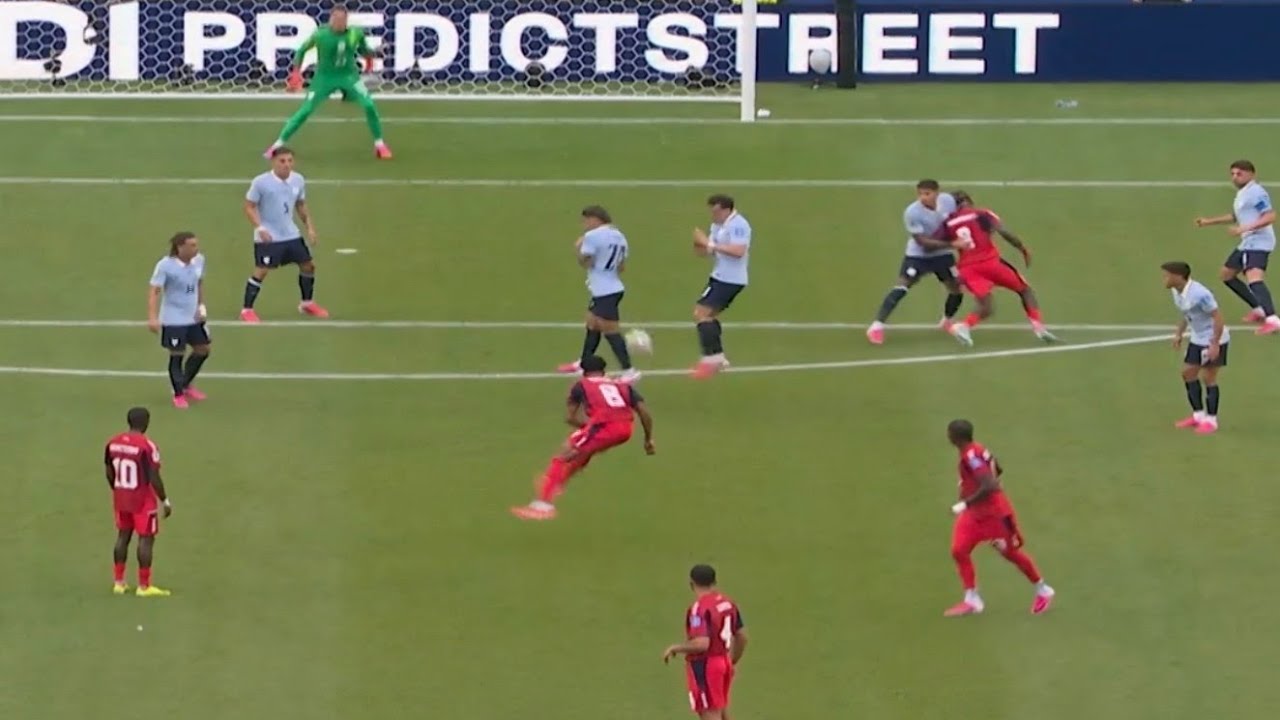
If the Spain draw was a defensive masterpiece, the 2-2 draw with Uruguay was an attacking statement. Kevin Pina — a defensive midfielder who plays for FC Krasnodar in Russia's Premier League — curled an outrageous 30-yard free kick through Uruguay's defensive wall and into the top corner in the 21st minute. The technique and audacity of the strike drew comparisons to the greatest set-piece goals in World Cup history, and it was historic: the first-ever FIFA World Cup goal scored by a Cape Verdean player.
Uruguay — managed by the legendary Marcelo Bielsa and boasting the quality of Maximiliano Araújo, Federico Valverde, Darwin Núñez, and Agustín Canobbio — responded with two goals either side of half-time to lead 2-1. Yet Cape Verde refused to accept defeat. Substitute Hélio Varela punished a goalkeeper mistake by Fernando Muslera in the 61st minute to restore parity, earning a draw that sent shockwaves across the football world.
The Numbers Behind the Fairytale
| Match | Score | Cape Verde Goals | Significance |
|---|---|---|---|
| Spain vs Cape Verde (MD1) | 0 – 0 | – | First-ever World Cup point |
| Uruguay vs Cape Verde (MD2) | 2 – 2 | K. Pina 21', H. Varela 61' | First-ever World Cup goal; first comeback |
Two games, two draws, two points. Cape Verde sit joint second in Group H alongside Uruguay, separated from them only on goal difference. Their final group match is against Saudi Arabia — who have lost once and drawn once — giving the Blue Sharks a very real opportunity to qualify for the Round of 32.
The Path to the Round of 32
For Cape Verde to advance, a win against Saudi Arabia in matchday 3 would almost certainly secure their place, regardless of the Spain vs Uruguay result. Even a draw could prove sufficient depending on how other results play out. What was once considered unthinkable — Cape Verde reaching the knockout rounds of a 48-team FIFA World Cup — is now firmly within their grasp.
The Blue Sharks' defensive structure, led by goalkeeper Vozinha and a back four of extraordinary organisation, remains the backbone of their success. But players like Kevin Pina, Hélio Varela, and forward Garry Rodrigues have shown that Cape Verde are not simply here to be competitive — they intend to win.
Why Cape Verde's Story Matters Beyond Football
For a nation of half a million people, the impact of this run cannot be overstated. Reports from the archipelago describe scenes of national celebration after each match — streets filled with blue and white, communities gathering around television screens, a collective pride that transcends the scoreline. The players represent not just a football team but the entire story of a small island nation that dared to believe it belonged among the world's best.
In the broader context of world football, Cape Verde's story is a reminder of why the expanded 48-team World Cup matters. It creates space for exactly these moments — for the Icelanders, the Moroccans, the Saudis of World Cup history to write new chapters. Cape Verde is writing the most beautiful chapter of 2026.
Frequently Asked Questions
No. The 2026 FIFA World Cup is Cape Verde's first appearance at the tournament. They qualified for the first time by winning their CONCACAF/CAF qualification campaign, becoming one of the smallest nations ever to reach the World Cup.
Kevin Pina scored Cape Verde's first-ever FIFA World Cup goal with a stunning 30-yard free kick in the 21st minute against Uruguay on June 21, 2026. Hélio Varela added a second goal in the 61st minute as Cape Verde drew 2-2.
Cape Verde are in joint second place in Group H with 2 points. A win against Saudi Arabia in their final group match would almost certainly secure their qualification for the Round of 32 for the first time in their history.
Cape Verde has a population of approximately 525,000 people and a land area of 4,033 km². They are one of the smallest nations by population ever to participate in a FIFA World Cup, making their unbeaten run of two draws against Spain and Uruguay one of the great surprises of the 2026 tournament.