
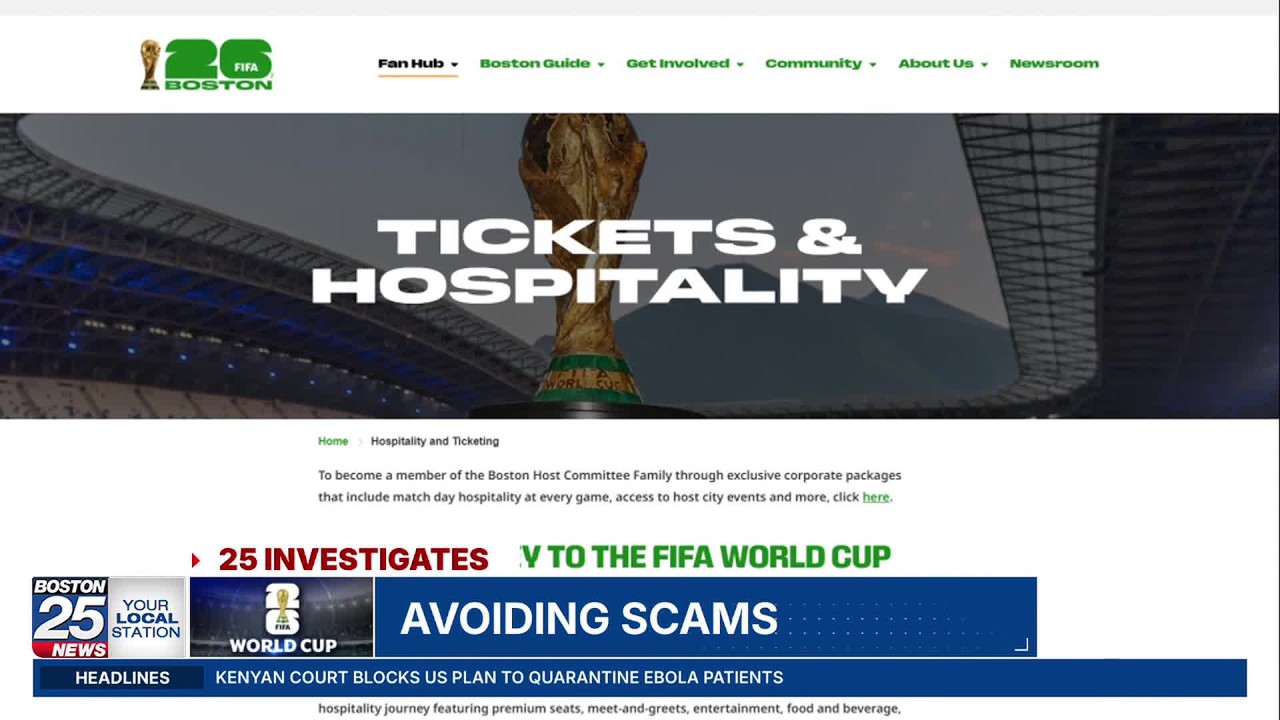
FIFA World Cup 2026 Cyber Alert: 19,000 Fake Domains and FBI Warning as Scammers Target Fans
With just days to go before the biggest football tournament in history kicks off, cybercriminals have launched the most sophisticated sports-related fraud campaign ever recorded — and millions of fans searching for tickets, streams and merchandise are in the crosshairs.
The Threat Is Real and Already Active
Published June 8, 2026 — Three days before the FIFA World Cup 2026 opening match between Mexico and South Africa at Estadio Azteca, cybersecurity researchers and United States law enforcement have issued urgent warnings to football fans: the online threat landscape surrounding this tournament is unprecedented in scale and sophistication.
According to a new report published today by Help Net Security, citing threat intelligence firm Intel 471, approximately 19,000 domains containing the word "fifa" have been registered since January 2026. While not every one of these is necessarily malicious — some may be legitimate fan sites or parked domains — security researchers have identified thousands that are actively being used to defraud fans searching for tickets, accommodation, streaming services and official merchandise.
The Internet Crime Complaint Center (IC3), which operates under the FBI, has issued a formal Public Service Announcement warning that "cyber threat actors are conducting spoofing attacks against the Fédération Internationale de Football Association (FIFA) website in advance of the 2026 FIFA World Cup." The announcement describes actors registering domain names that closely mimic FIFA's official web addresses to steal personal information and money from unsuspecting fans.
Scale of the Fraud: By the Numbers
The numbers involved in this campaign are staggering. Palo Alto Networks' Unit 42 threat research team describes the 2026 FIFA World Cup as "the largest and most complex cyberattack surface in sporting history." The combination of a 48-team tournament (expanded from 32 in 2022), three host nations, 16 stadiums, over 5 million expected attendees and a global television audience in the billions creates an enormous opportunity for criminals.
| Threat Type | Scale / Details |
|---|---|
| Fake FIFA domains registered | ~19,000 since January 2026 |
| Actively malicious domains | ~4,300 (Group-IB) |
| Parked / dormant threat domains | ~3,800 (Group-IB) |
| Estimated ticket fraud losses | $71M–$474M (Group-IB) |
| FBI PSA issued | May 27, 2026 (IC3.gov) |
The Canadian Centre for Cyber Security has also issued its own threat bulletin, noting that the expanded tournament footprint across three nations makes it uniquely challenging for authorities to coordinate responses. With matches taking place from Vancouver and Toronto in Canada to Mexico City and Monterrey in Mexico, to 11 cities across the United States, the jurisdiction complexity alone creates gaps that criminals are eager to exploit.
How the Scams Work: Types of Fraud Targeting Fans
Cybersecurity experts have categorised the fraudulent campaigns into several distinct types, each designed to target different fan behaviours:
- Fake ticket websites: These sites closely mimic FIFA's official ticketing portal (tickets.fifa.com) and offer "last-minute" tickets at inflated prices or as "official resales." After payment, victims receive either counterfeit tickets or nothing at all. Some sites collect passport scans and selfies under the guise of identity verification — information used later for identity theft.
- Bogus streaming sites: Sites offering free or cheap live streams of World Cup matches. Users are prompted to create accounts or "verify" payment details. In many cases, users who install the "viewing app" are unknowingly installing banking malware or spyware onto their devices.
- Counterfeit merchandise shops: Fake online stores selling official-looking jerseys, scarves, and memorabilia from well-known players and teams. Products either never arrive or are low-quality counterfeits. Some domains use images scraped directly from official club and national team shops.
- Fake travel and hospitality packages: Scam travel agencies offering World Cup accommodation packages, particularly in cities with limited hotel availability like Dallas, Miami, and New York/New Jersey. These sites take large deposits upfront and then disappear.
- Phishing emails: Mass emails purporting to be from FIFA, sports hospitality companies, or official travel partners, directing recipients to fraudulent sites or asking for personal details. Many use urgent language: "Your World Cup seat is about to expire — confirm now."
FBI's Official Recommendations for Fans
The FBI and IC3 have published a set of practical steps for fans to protect themselves online during the tournament:
- Type URLs directly: When navigating to FIFA's official website or ticketing portal, type fifa.com or tickets.fifa.com directly into your browser's address bar. Do not click links from search results, social media ads, or emails.
- Verify the domain carefully: Scammers use subtle variations like "fifaticket.com", "fifa-wc2026.com", or "officialfifashop.net". Always check that the URL is exactly as expected.
- Use official channels only: Purchase tickets exclusively through FIFA's official platform. If resale is necessary, use only officially sanctioned resale programmes.
- Be suspicious of deals that seem too good: Tickets offered below face value, hotel packages dramatically cheaper than the market rate, or free streaming services asking for personal details are almost certainly fraudulent.
- Report suspected fraud: In the United States, report to IC3.gov. In Canada, report to the Canadian Anti-Fraud Centre. FIFA also maintains a fraud reporting mechanism at fifa.com/en/contact.
Why World Cups Are Prime Targets
Major sporting events have always attracted cybercriminal attention — the Olympics, Super Bowl and UEFA Champions League final all see spikes in fraud activity. But the scale of the 2026 World Cup is in a different category. This is the first tournament to feature 48 nations, creating fan bases from 48 countries simultaneously searching for tickets and related services. The hosting by three nations across 16 different stadiums means that travel, accommodation and logistics searches are more complex than ever, creating more opportunities for deceptive offers to appear plausible.
The tournament's North American host cities — particularly Dallas-Fort Worth, Miami, Los Angeles and New York/New Jersey — are among the world's most expensive for short-term accommodation. This scarcity environment is exactly what scammers exploit. When fans cannot find hotels through legitimate channels at reasonable prices, they become more susceptible to fraudulent alternatives that appear just slightly below market rate.
Analysts at SecureWorld note that artificial intelligence tools have made it dramatically easier for criminals to create convincing fake websites and phishing emails at scale. The spoofed FIFA domains identified by researchers are "virtually indistinguishable" from the real site to an untrained eye, complete with realistic FIFA branding, functional-looking login forms and even customer service chat boxes that are entirely automated.
Protecting Yourself: Practical Steps for UK and International Fans
Beyond the FBI's official guidance, cybersecurity professionals recommend several additional precautions for international fans travelling to or following the tournament:
- Use a credit card (not debit) for any online purchases related to the World Cup, as credit cards offer stronger fraud protection in most countries.
- Enable two-factor authentication on any accounts associated with your FIFA ticketing login.
- Be cautious of any World Cup-related social media accounts, even verified-looking ones — scammers have been known to create fake accounts mimicking official FIFA channels.
- If you receive a World Cup prize notification ("You've won VIP tickets!"), treat it as fraudulent by default unless you entered a specific competition through official channels.
For tips on buying legitimate tickets, visit our guide: How to Buy Tickets for FIFA World Cup 2026. And if you're wondering about ticket-related incidents already affecting the tournament, read about FIFA's $0 ticket glitch that gave 60 fans free World Cup seats.
Frequently Asked Questions
Approximately 19,000 domains containing "fifa" have been registered since January 2026, according to threat intelligence firm Intel 471. Of these, around 4,300 are actively malicious, and a further 3,800 are parked and potentially ready to be activated as the tournament progresses.
Yes. The FBI's Internet Crime Complaint Center (IC3) issued a formal Public Service Announcement (PSA260527) warning fans about threat actors spoofing FIFA's official websites to steal personal information and money. Fans should report suspected fraud to IC3.gov.
The only safe way to purchase tickets is through FIFA's official ticketing platform at tickets.fifa.com. Type this URL directly into your browser rather than clicking search results or links in emails. FIFA's authorised resale programme is the only legitimate secondary market option.
Report the incident to IC3.gov (USA), the Canadian Anti-Fraud Centre (Canada), Action Fraud (UK), or your national cybercrime reporting authority. Contact your bank or credit card provider immediately to dispute any fraudulent charges. Preserve all communications and receipts as evidence.