
How Defensive Compactness Is Reshaping FIFA World Cup 2026: Lessons from Germany and Netherlands' Exits
By fifaworldcup-news.org Tactical Desk | June 30, 2026
Introduction: The Old Order Is Crumbling
June 29, 2026 will be remembered as the day European possession football was served its most brutal reality check in a generation. Within hours of each other, Germany and the Netherlands — two of the continent's most decorated footballing nations, two programs built on controlling the ball and dictating tempo — were eliminated from the FIFA World Cup 2026 Round of 32. Neither lost in ninety minutes. Both were beaten in penalty shootouts. And both, crucially, were made to look tactically naive by opponents who arrived with a very different idea of how football should be played.
Paraguay, ranked outside the world's top 20 heading into the tournament, absorbed everything Germany threw at them and walked away with one of the great World Cup upsets. Morocco, who shocked Europe in Qatar four years ago and have now done it again in the United States and Canada, suffocated the Netherlands with a defensive intelligence that Didier Deschamps and Louis van Gaal's successors would envy. The message from the Round of 32 is loud and unambiguous: compactness, transition, and elite goalkeeping are beating possession football at the highest level. This is a tactical revolution, and it is happening in real time.
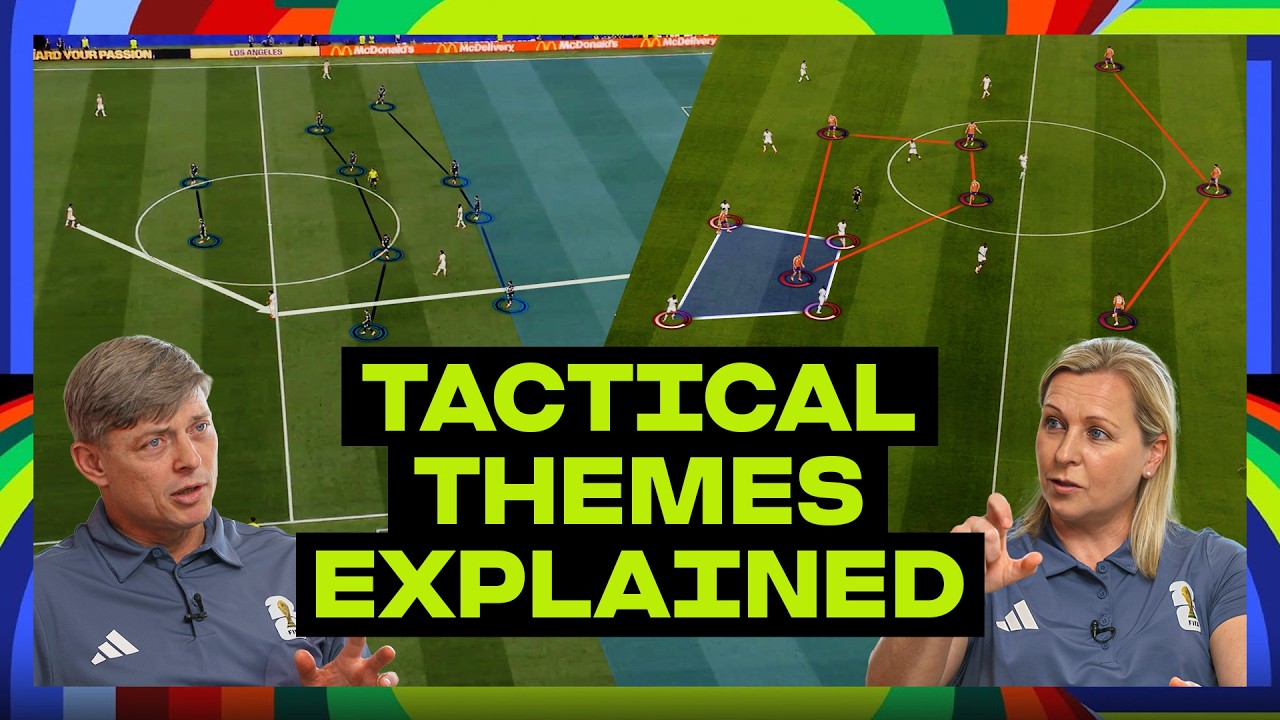
The Low Block Decoded: How Paraguay and Morocco Set Up
The tactical blueprint Paraguay and Morocco deployed was not accidental, nor was it improvised. Both teams arrived in North America having built their entire tournament strategy around a single philosophical core: make yourself impossible to play through, then punish the moment the opponent's shape opens up.
Paraguay, under their pragmatic coaching staff, set up in a disciplined 4-4-2 mid-block that quickly collapsed into a 4-5-1 low block once Germany gained field position. The two banks of four and five remained compact, narrow, and vertically compressed — denying space in behind and forcing Germany's creative players, including Kai Havertz and Jamal Musiala, to receive the ball facing their own goal or in heavily congested zones. During qualifying, Paraguay averaged just 38% possession across their campaign and conceded an average of fewer than 0.6 goals per match. They did not come to the World Cup to play pretty football. They came to win ugly.
Morocco's approach against the Netherlands was conceptually similar but even more sophisticated in its execution. The Atlas Lions deployed a 4-3-3 that transformed into a 4-5-1 out of possession, with their wide forwards tracking back industriously to form a formidable five-man midfield wall. Hakim Ziyech and Soufiane Rahimi were not simply wingers — they were the first line of Morocco's defensive press and the first outlets of their counter-attack, performing dual roles that demanded extraordinary physical and tactical discipline. The Netherlands, for all of Cody Gakpo's individual quality, could not find a way through a structure that offered no gaps between the lines.
What both teams understood — and what Germany and the Netherlands appeared to forget — is that possession is not an end in itself. Controlling the ball means nothing if there is no space to exploit. And when a compact defensive block gives you the ball willingly, inviting you to probe a wall of bodies, possession becomes a trap.
Possession Without Penetration: The Numbers Tell the Story
The statistics from both matches paint a damning picture for European football's dominant philosophy. Germany controlled well over 60% of possession against Paraguay. The Netherlands did similar against Morocco. Both teams generated a respectable number of shots. Yet both teams scored exactly one goal from open play, and in both cases those goals required moments of individual brilliance rather than systemic superiority.
This is the central paradox of possession-based football at tournament level: the more you dominate the ball, the more predictable your attacks become. When a team sits in a low block for sustained periods, they are not conceding territory out of weakness — they are doing so deliberately, channelling the opponent's movement into areas where their defensive organization is strongest. Wide areas become dead ends. Half-spaces are occupied by disciplined midfielders. The central channels are crowded. High crosses meet well-positioned centre-backs. The xG (expected goals) numbers may look acceptable on a spreadsheet, but the quality of chances being created — speculative long-range efforts, deflected crosses, set-piece scrambles — rarely reflects the dominance the possession numbers suggest.
For Germany, this was not even a new problem. Ecuador had already exposed their structural vulnerabilities in the group stage, with Valencia Plata scoring a composed 77th-minute winner to signal that Die Mannschaft's defensive fragility and inability to unlock deep defences were genuine weaknesses, not one-off aberrations. The Paraguay match was a continuation of the same story. Germany had the ball. Germany could not use it. And when Paraguay countered, Germany looked vulnerable.
The Role of Set Pieces: Scoring Without Controlling
Perhaps the most telling detail of both matches is where the decisive moments came from. Neither Paraguay nor Morocco scored from sustained possession sequences. Both teams scored — or secured their crucial equalisers — from dead balls and transitional moments that required nothing more than defensive organisation and one moment of technical precision.
Julio Enciso's header for Paraguay was the product of smart set-piece design. A delivery into a dangerous zone, a runner who had studied Germany's defensive marking patterns, and the composure to finish clinically. It required no build-up play, no progressive passing sequences, no intricate combination football. It required one good delivery and one brave, well-timed jump.
Issa Diop's 91st-minute equaliser for Morocco was even more dramatic and even more instructive. With the Netherlands closing in on what appeared to be a routine victory, Chemsdine Talbi's in-swinging cross found Diop ghosting between Virgil van Dijk and Teun Koopmeiners — two world-class players who, in that moment, lost their concentration and their marking assignments. Diop's header past Bart Verbruggen sent the match into extra time and, ultimately, a penalty shootout Morocco would win. One delivery. One lapse. One tournament exit for a nation that had dominated the ball for 91 minutes.
The lesson is uncomfortable for European coaching staffs: at World Cup level, set pieces are not supplementary weapons. They are primary goal-scoring mechanisms. Teams that defend heroically for 80 minutes and wait for one perfectly designed dead-ball routine are not playing anti-football. They are playing smart football.
Goalkeeper Dominance: Bounou and Gill — The Unsung Weapons
Behind every compact defensive structure is a goalkeeper who can act as the last line — and, crucially, as the nerve centre of the entire system. In both matches on June 29, the goalkeepers of the lower-ranked sides were the difference between elimination and progression.
Yassine Bounou's performance against the Netherlands was a masterclass in high-stakes goalkeeping. Throughout the match, he made sharp reflex saves, commanded his penalty area with authority, and — most importantly — saved Crysencio Summerville's penalty in the shootout to tilt the balance decisively in Morocco's favour. Bounou has been here before: his heroics in Qatar 2022 helped Morocco eliminate Spain and reach the semi-finals. His experience, composure, and technical excellence make him arguably the most influential goalkeeper in this tournament.
Orlando Gill was equally pivotal for Paraguay. Throughout the match, Gill made crucial saves that kept Germany's superior attacking talent at bay, denying Havertz and company in moments that could have ended the contest before it reached penalties. In a shootout, a goalkeeper's presence can alter the psychological dynamic entirely — and Gill's performance gave Paraguay the belief that even at 4-3 on penalties, one more save was possible.
This is the overlooked element of compact defensive football: the strategy only functions if the goalkeeper behind the block is capable of saving the chances that leak through. A low block invites pressure. Conceding shots is part of the design. The goalkeeper must be capable of producing heroics when called upon — and in Bounou and Gill, Morocco and Paraguay had exactly the right men for the job.
Today's Implications: What France and Mexico Must Do
The Round of 32 results send urgent messages to the favorites who have yet to play their knockout matches. France face Sweden in what could easily become a repeat of the Germany-Paraguay script. Sweden are a disciplined, physically imposing side capable of deploying a compact defensive structure, absorbing pressure, and threatening on the transition and from set pieces. Kylian Mbappé's France have the individual quality to unlock any defence — but quality without a coherent tactical plan to break down a low block is insufficient.
Didier Deschamps' challenge is to ensure France do not fall into the same trap Germany did: passing the ball horizontally in front of a deep defensive block, generating crosses that go nowhere, and neglecting to use runners in behind, diagonal balls that stretch the defensive shape, and early set-piece variations that disrupt the opponent's rhythm. France must be aggressive and direct. They cannot afford to be patient and predictable.
The Mexico versus Ecuador match carries its own historic warning. Ecuador already proved against Germany in the group stage that they can execute a disciplined defensive plan and win with a late counter-attacking goal. Mexico, for all their technical quality and tactical intelligence, must respect Ecuador's ability to defend deep and threaten on the break. A single moment of defensive naivety — a set piece conceded in a dangerous position, a transition where a midfielder gambles forward — could spell elimination.
What Argentina and Brazil Can Learn
Argentina and Brazil, the tournament's two most decorated nations in the modern era, should be watching the Germany and Netherlands exits with forensic attention. Both South American giants have upcoming knockout matches that will test their ability to break down well-organised opposition.
Brazil's match against Japan was the exception that proved the rule in this round — a 2-1 victory that did not require a penalty shootout. But Japan's defensive organisation still caused Brazil moments of uncertainty, and the Seleção's ability to combine individual brilliance with genuine tactical variety will be tested more severely as the tournament progresses.
Argentina, the reigning world champions, already know from their 2022 experience — and from the tournament's opening rounds — that no lead is safe against a team willing to sacrifice possession and wait for one moment of quality. The lessons are clear:
- Do not allow compact opponents to dictate the rhythm of the match by inviting you to probe their block indefinitely
- Use width aggressively and early — stretch the defensive shape horizontally before attempting vertical penetration
- Exploit set pieces as primary, not secondary, weapons; design routines specifically to target the opponent's marking weaknesses
- Vary the tempo relentlessly — slow possession followed by sudden, explosive vertical passes that catch defenders transitioning
- Protect your own defensive shape rigorously; a counter-attack conceded at 0-0 is catastrophic against disciplined opponents
- Prepare your goalkeeper for moments of high pressure; in tournament football, one world-class save is worth more than an extra ten minutes of ball control
Historical Context: Morocco's Blueprint Is Not New
It is worth remembering that Morocco's triumph over the Netherlands is not an isolated phenomenon. In Qatar 2022, the Atlas Lions eliminated Belgium — a team ranked in the world's top five at the time — and then stunned Spain and Portugal with the same defensive intelligence and transitional precision they displayed on June 29. What Morocco have done is take the tactical model that surprised the world four years ago and refine it to an even higher level of execution. They are not a surprise anymore. They are a system.
The difference in 2026 is that multiple teams have now adopted and adapted the Morocco blueprint. Paraguay did what Belgium, Spain, and Portugal could not do against Germany: make the European giants look lost without the ball. The compact defensive revolution is spreading across South America, Africa, and Asia — and European football's possession orthodoxy has not yet found a reliable answer.
FAQ: Tactical Questions from the Round of 32
Germany and the Netherlands build their attacks through patient, horizontal possession in midfield before attempting to find vertical pass combinations into the final third. Against a compact low block, this approach is particularly ineffective because the defensive team can remain organised and recover shape between each passing sequence. Neither team consistently uses direct vertical passes, wide overloads, or rapid tempo changes that disrupt a deep defensive structure — making them predictable and relatively straightforward to defend against at high intensity.
Three of the first four Round of 32 matches ended in penalty shootouts — Paraguay beat Germany 4-3 on penalties, Morocco beat the Netherlands 3-2 on penalties, and a third match also required spot-kicks. Only Brazil's 2-1 win over Japan was decided in regular time. When defensive compactness is this effective at preventing goals in ninety and one hundred and twenty minutes, shootouts become the most likely tiebreaker. The premium on elite goalkeepers — and on penalty preparation — has never been higher.
The most reliable methods include: high-tempo direct vertical passes that force defenders to turn and retreat rather than hold their line; aggressive wide overloads that stretch the defensive shape laterally and create gaps in the central channel; creative set-piece routines designed around specific marking weaknesses identified in analysis; and sustained pressing to win the ball high up the pitch before the defensive block can be set. The key is unpredictability — any approach becomes ineffective the moment it becomes predictable, because a well-organised low block adjusts faster than an attacking team can create a new problem.