
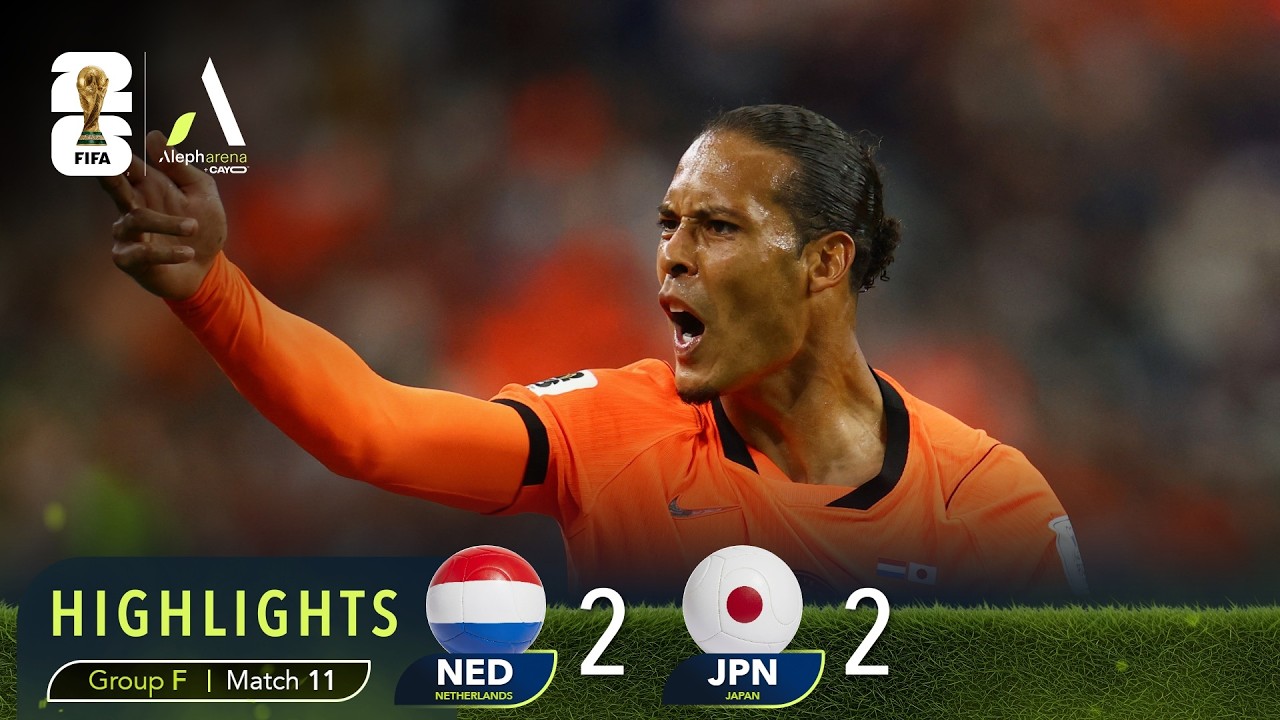
Japan's Incredible Comeback vs Netherlands: What the 2-2 Draw Means for Group F
The Samurai Blue did it again. Twice trailing at AT&T Stadium in Dallas, Japan refused to fold against the Netherlands and snatched a dramatic 2-2 draw through Daichi Kamada's 89th-minute deflection — a result that could define Group F at the FIFA World Cup 2026.
A Second Half for the Ages
After a cautious opening 45 minutes in Dallas, the Netherlands vs Japan Group F encounter exploded into life in the second half with four goals in 39 minutes. Virgil van Dijk, one of the tournament's most influential defenders, headed the Dutch ahead from Ryan Gravenberch's delivery in the 50th minute — a powerful, precisely placed finish that gave Japan goalkeeper Zion Suzuki no chance.
Japan's response was swift and dangerous. Just seven minutes later, Keito Nakamura, one of the Samurai Blue's most creative players, let fly with a low strike that deflected off the foot of Jan Paul Van Hecke and looped past Bart Verbruggen. The Dutch goalkeeper, who had been one of the best young goalkeepers in European football this season, was beaten by a moment he could not have anticipated.
Netherlands regained the lead through a moment of individual brilliance. Crysencio Summerville, just as he did so many times for Leeds United and Bayer Leverkusen, cut inside and curled a left-foot shot into the far corner. The finish was exquisite — one of the most technically pure goals of the tournament so far. It looked like three points were heading to the Dutch.
Kamada's Moment — The Goal That Shocked Dallas
With one minute remaining, Japan won a corner. The delivery was whipped in, Koki Ogawa attacked the ball and nodded it goalward — and the ball struck Daichi Kamada, who had no idea it was coming. The deflection looped up and over the despairing dive of Verbruggen, who got a hand to it but could not prevent it from crossing the line.
It was Japan's latest-ever goal at a FIFA World Cup match. The Samurai Blue had refused to accept defeat, and in doing so denied the Netherlands a win that could have made their route to the knockout stages considerably more comfortable. Instead, both teams sit on one point heading into their next group matches.
According to Opta Analyst, this was the second-latest result-altering goal conceded by the Netherlands outside of extra-time at a World Cup final, surpassed only by a 90+5 equaliser conceded against Mexico in 1998 — nearly three decades ago.
The Dutch Perspective: A Warning Sign?
For Netherlands manager Ronald Koeman, the result will be a source of deep frustration. The Dutch had more than enough quality to win this game and were the better team for large stretches. Van Dijk was commanding at the back, Summerville was electric in attack, and Gravenberch orchestrated from midfield with authority.
But the Dutch also showed vulnerability. Their failure to add a third goal when Japan were struggling to respond after Summerville's 64th-minute goal proved costly. They also conceded directly from a set-piece — something that had been an area of concern in qualifying. This was the first time in FIFA World Cup history that the Netherlands took the lead twice but failed to win the match.
With Sweden topping Group F after a 5-1 demolition of Tunisia on the same day, the Dutch will know they cannot afford to drop more points in their remaining group matches. The next meeting between Netherlands and Sweden could effectively be a winner-takes-all contest for top spot.
Japan's Path to the Knockouts
For Japan head coach Hajime Moriyasu, the draw is an excellent outcome. Japan have now taken at least a point in their opening World Cup match for the fourth consecutive tournament. Their organised defensive structure frustrated the Dutch for long periods, and their ability to strike on the counter — demonstrated by Nakamura's rapid equaliser — makes them a genuinely dangerous side for any opponent.
Japan face Tunisia and Sweden in their remaining Group F matches. A win over Tunisia — who were hammered 5-1 by Sweden — would put the Samurai Blue in a strong position to qualify for the knockout rounds. The Japan squad includes Premier League and European-based stars capable of making a deep run in this tournament.
Group F Implications
| Team | PL | W | D | L | GF | GA | Pts |
|---|---|---|---|---|---|---|---|
| Sweden | 1 | 1 | 0 | 0 | 5 | 1 | 3 |
| Netherlands | 1 | 0 | 1 | 0 | 2 | 2 | 1 |
| Japan | 1 | 0 | 1 | 0 | 2 | 2 | 1 |
| Tunisia | 1 | 0 | 0 | 1 | 1 | 5 | 0 |
Sweden's emphatic 5-1 win over Tunisia the same evening means the Dutch and Japanese are already playing catch-up. The upcoming Sweden vs Netherlands and Sweden vs Japan fixtures will be crucial. Tunisia need a miracle to qualify, but their consolation goal showed they at least have some fight.
Frequently Asked Questions
Keito Nakamura scored Japan's first equaliser in the 57th minute with a shot that deflected in off Van Hecke. Daichi Kamada scored the dramatic 89th-minute equaliser when an Ogawa header deflected off him and looped over Verbruggen.
Virgil van Dijk headed the Netherlands ahead in the 50th minute from Gravenberch's cross. Crysencio Summerville added a stunning curled left-foot finish in the 64th minute to restore the Dutch lead before Japan's late equaliser.
Japan sit on one point after their opening match, level with Netherlands. They face Tunisia and Sweden next — a win over Tunisia would put them in strong contention for the knockout rounds, especially with Sweden likely to accumulate points quickly.
Yes. According to Opta, this was the first time in FIFA World Cup history that the Netherlands took the lead twice but failed to go on and win the match.