
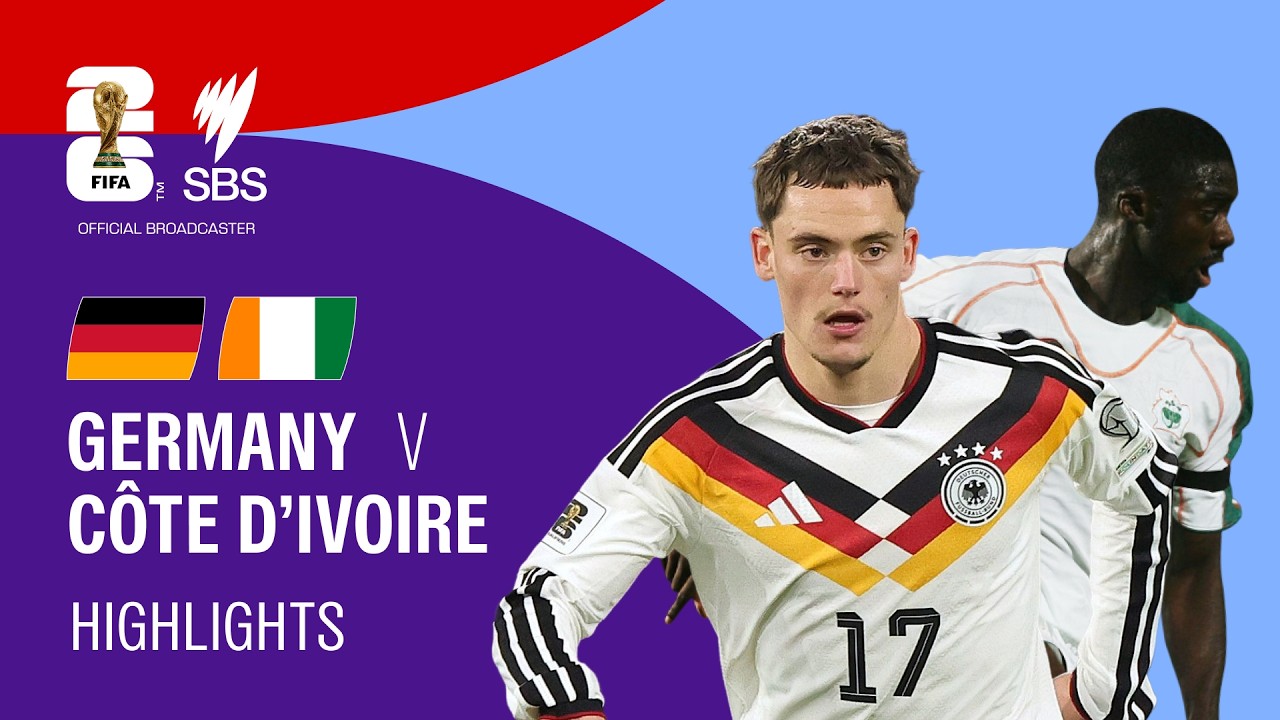
Schlotterbeck Out: Germany's Defensive Blow
Germany's World Cup 2026 preparations for the knockout stages have been dealt a significant blow. Borussia Dortmund centre-back Nico Schlotterbeck has been ruled out of the remainder of the tournament after sustaining a torn medial ligament in his left ankle during the 2–1 win over Ivory Coast on June 20. An MRI confirmed the injury, leaving Julian Nagelsmann to rebuild his defensive setup for the Round of 32 and beyond.
What Happened — The Injury
Schlotterbeck's tournament ended in painful circumstances during Germany's tense Group E clash against Ivory Coast at Toronto Stadium. The 24-year-old was involved in a first-half challenge with Amad Diallo and appeared to roll his ankle badly, but showed the character typical of a top-level international by continuing through to halftime rather than leaving the field immediately.
At the break, Germany's medical staff assessed the damage and made the decision: Schlotterbeck would not return for the second half. Antonio Rüdiger came on in his place, and the substitution proved inspired — even if the reason for it was deeply unfortunate. Deniz Undav scored twice as a substitute (68' and 94') to complete a dramatic comeback from 1–0 down and send Germany into the knockout stages with a 2–1 win.
But the post-match atmosphere in Germany's camp was tempered by the MRI results. A torn medial ligament in the left ankle — an injury that typically requires two to three months of recovery — means Schlotterbeck will not kick another ball at this World Cup. He will stay with the squad but only as a supportive presence.
Who Was Schlotterbeck — And Why Does This Hurt?
Nico Schlotterbeck is one of the most highly rated young centre-backs in European football. The Borussia Dortmund defender, aged 24, has been a mainstay in Julian Nagelsmann's back line since breaking into the Germany squad. His combination of physical presence, technical ability with the ball, and positional intelligence had made him one of the first names on the teamsheet heading into the tournament.
What separates Schlotterbeck from a conventional centre-back is his comfort in possession. Germany's high-pressing, possession-based system under Nagelsmann requires its defenders to be comfortable carrying the ball out from the back, playing through pressure, and switching play at pace. Schlotterbeck does all of these things better than almost any other option in Nagelsmann's squad — his absence creates a qualitative gap that cannot be fully replaced.
The emotional impact on the squad should not be underestimated either. Germany are playing with a collective energy and sense of purpose at this World Cup — the kind of cohesion that often breaks down when a key player suffers a devastating injury. How the squad responds in the coming days will say much about their character heading into the knockout stages.
Germany's Options — Who Steps In?
Nagelsmann has several capable alternatives at centre-back, though none replicates Schlotterbeck's specific skill set:
- Antonio Rüdiger — The Real Madrid veteran immediately replaced Schlotterbeck vs Ivory Coast and is the most experienced option. Rüdiger's physicality and reading of the game make him the most natural starting partner for Jonathan Tah. However, at 31, his ball-playing ability is less polished than Schlotterbeck's.
- Waldemar Anton — The Stuttgart defender brings defensive solidity and has been a reliable squad player. More conservative in possession than Schlotterbeck, but disciplined and organised.
- Malick Thiaw — The AC Milan centre-back offers pace and athleticism that could prove useful against quick forwards in the knockout rounds. Still building his international reputation but highly regarded at club level.
Most analysts expect Rüdiger and Tah to start as Germany's central defensive pairing in the Round of 32 — a combination with proven international pedigree, even if it lacks the ball-carrying dynamism that Schlotterbeck provided.
Germany's Path Forward — Can They Still Win the World Cup?
The loss of Schlotterbeck is a blow, but Germany remain one of the most complete squads in the tournament. They have already qualified for the Round of 32 as Group E winners — their dominant performances against Curaçao (MD1) and Ivory Coast (MD2) showed the depth and quality available across all positions.
Going forward, Germany's attacking options — Jamal Musiala, Florian Wirtz, Kai Havertz — are arguably as exciting as any team in the tournament. The midfield, anchored by captain Joshua Kimmich, offers both defensive intelligence and creative output. And even with Schlotterbeck absent, a back four of Raum/Mittelstädt, Tah, Rüdiger, and Kimmich (when inverted) or a similar arrangement gives Nagelsmann enough quality to compete at the highest level.
For Schlotterbeck personally, the injury is a devastating twist in what was meant to be a landmark tournament — his first FIFA World Cup, on the biggest stage in football. The Dortmund defender will spend the coming weeks watching from the stands, supporting his teammates while beginning the long road to recovery.
Injury Context — Germany's Wider Fitness Picture
Schlotterbeck's injury adds to a broader conversation about the physical toll of a packed football calendar. The 2025–26 season — featuring an expanded Champions League, new FIFA Club World Cup, and domestic leagues — has pushed elite footballers to their limits. Germany are not alone in managing injury concerns at this World Cup; nearly every major nation has been forced to adapt their plans at some stage of the group stage.
For Germany, the key is resilience. In 2014, they lost key players to injury during the tournament and still found a way to win the World Cup. The culture of adaptability and depth — built over decades — has long been Germany's greatest competitive advantage. Whether they can demonstrate that quality once more against the world's best in the knockout rounds remains to be seen.
Frequently Asked Questions
Schlotterbeck suffered a torn medial ligament in his left ankle during Germany's 2–1 win over Ivory Coast in Group E on June 20, 2026. The injury occurred in the first half following a challenge with Amad Diallo. An MRI confirmed the severity, ruling him out for at least two months and for the remainder of the World Cup.
Antonio Rüdiger is expected to replace Schlotterbeck in Germany's starting eleven, partnering Jonathan Tah at centre-back. Waldemar Anton and Malick Thiaw are also available options for Julian Nagelsmann. Rüdiger came on at halftime when Schlotterbeck was injured against Ivory Coast.
Germany remain strong contenders. They have already qualified for the Round of 32 as Group E winners, with a squad that includes world-class attackers Jamal Musiala, Florian Wirtz, and Kai Havertz. The defensive depth — Rüdiger, Tah, Thiaw, Anton — gives Nagelsmann capable alternatives, though none perfectly replicates Schlotterbeck's ball-playing qualities.
Nico Schlotterbeck is a 24-year-old German centre-back who plays for Borussia Dortmund. Known for his composure on the ball, his ability to carry out from the back, and his physical dominance, he had established himself as one of Europe's most promising defenders. This World Cup was his first major international tournament.