
Paraguay Stuns Germany in Penalty Shootout: The Biggest Upset of FIFA World Cup 2026
June 29, 2026 | Round of 32, FIFA World Cup 2026 | By FIFA World Cup News Staff
Germany 1–1 Paraguay | Paraguay win 4–3 on penalties
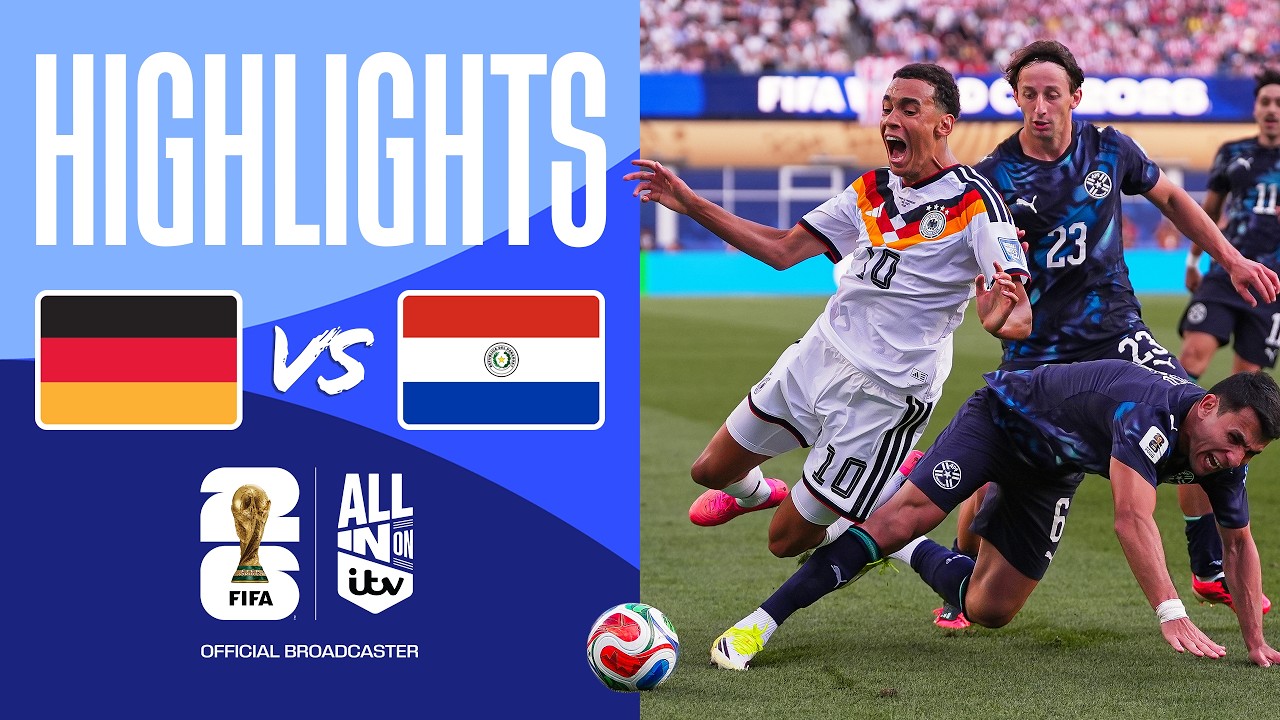
Watch on YouTube →
Introduction: Shock Heard Around the World
There are World Cup upsets, and then there are moments that fundamentally rewrite football's sense of order. On June 29, 2026, Paraguay delivered the latter. In one of the most dramatic, tension-soaked Round of 32 ties in FIFA World Cup history, the Albirroja held Germany to a 1–1 draw across 120 bruising minutes, then eliminated the four-time world champions on penalties, 4–3, in a shootout of nerve-shredding intensity.
Germany — winners of the World Cup in 1954, 1974, 1990, and 2014 — had built a near-mythical reputation in shootouts, converting 6 of their previous 7 such contests in major tournaments. The Germans were the gold standard of penalty ruthlessness. Paraguay, a nation that has never lifted the golden trophy and was widely expected to exit quietly in the round of thirty-two, had other ideas. When José Canale tucked home the decisive kick in sudden death, the footballing world stared at its screens in collective disbelief.
Al Jazeera called it "one of the all-time World Cup upsets." It is hard to argue otherwise.
Match Summary
| Event | Player | Team | Time |
|---|---|---|---|
| Goal | Julio Enciso (header) | Paraguay | 45+2' |
| Goal | Kai Havertz | Germany | 52' |
| Goal (DISALLOWED – VAR) | Jonathan Tah (header) | Germany | Extra Time |
| Penalty Shootout | Paraguay win 4–3 | — | — |
| GK Saves (shootout) | Orlando Gill (x2) | Paraguay | — |
| Decisive Penalty | José Canale | Paraguay | Sudden Death |
Match Narrative: How Paraguay Silenced the Giants
From the opening whistle, Germany moved the ball with the languid authority of a side that had topped Group E with authority, even surviving an early scare against Ecuador. Julian Nagelsmann's men pressed high, recycled possession through midfield with crisp, diagonal switches, and threatened with their characteristic directness. Paraguay, by contrast, were compact, disciplined, and deceptively dangerous on the counter — a team that had navigated Group D, which included the host nation United States, with resilience and tactical intelligence.
The deadlock was broken in the most unexpected fashion, and at the most psychologically painful moment for Germany: the second minute of first-half injury time. A teasing delivery into the box found Julio Enciso, the Brighton-forged winger whose aerial presence is not the first quality scouts write about when describing him. Yet Enciso met the ball with a perfectly timed, glancing header that arced over the German goalkeeper and nestled into the corner. The Paraguay bench erupted. The German defenders looked at each other with a mix of disbelief and frustration. They had dominated large portions of the half and somehow trailed at the break.
Germany's response was swift. Just seven minutes into the second half, Kai Havertz — composed, clinical, and reliable in the big moments — latched onto a precise through ball and finished with the minimum of fuss to restore parity. Germany now had over forty minutes of regulation time to find a winner, and they pressed with increasing urgency. Chances came and went. The German attackers found Paraguay goalkeeper Orlando Gill in commanding form, and when he was beaten, the woodwork intervened. For all their possession and pressure, Germany could not deliver the decisive blow in ninety minutes, and the match rolled, breathlessly, into extra time.
Extra time offered more of the same: German dominance, Paraguayan defiance. Substitutions arrived on both sides. Legs began to tire. The game seemed to be heading toward a shootout — until it wasn't.
The VAR Controversy That Changed Everything
Deep into extra time, Germany appeared to have finally broken the deadlock. Defender Jonathan Tah, arriving with power from a corner kick, powered a header into the net. The German players celebrated with wild relief; Nagelsmann rose from his technical area; German fans in the stadium erupted. For a fleeting, excruciating moment, it looked as though the four-time champions had found a way through.
Then the VAR check began. It lasted several agonising minutes. The referee was called to the pitchside monitor. The ruling, when it came, was as follows: Waldemar Anton, while challenging in the box, had impeded Paraguayan goalkeeper Orlando Gill from making a save — a foul in the build-up that nullified the goal. The celebrations died. Germany's players sank to their knees. Paraguay's bench stormed onto the pitch in relief.
The decision was immediately and fiercely contested. German players surrounded the referee. Nagelsmann looked thunderstruck on the touchline. Pundits across Europe were divided — some argued the contact on Gill was clear and the referee had little choice; others, including several former German internationals speaking in the aftermath, called it an "outrage" and a "game-defining injustice." The debate will rage on. What it cannot change, however, is the scoreline: 1–1, penalties.
Orlando Gill: The Man Who Stopped Germany
When the penalty shootout began, Paraguay's goalkeeping coach had presumably done his homework. But preparation only gets you so far — at some point a goalkeeper simply has to perform. Orlando Gill performed beyond any reasonable expectation.
The Paraguay number one — a commanding presence who had been largely unheralded before this tournament — produced two crucial saves during the shootout, diving with fine instinct and committing at exactly the right moments. Against a German squad that had historically been the most reliable penalty-takers in the international game, Gill's interventions were seismic. Each save sent the Paraguay supporters into fresh paroxysms of joy and drained just a little more belief from the German contingent.
Across the full 120 minutes plus the shootout, Gill made a string of sharp stops in regulation and extra time that kept Paraguay alive. His performance was, by the conclusion, the single most important individual contribution on the pitch. In a tournament already full of breakout stories, Gill announced himself to a global audience with emphatic authority.
José Canale and the Decisive Kick
By the time José Canale stepped up to take the penalty that sent Paraguay into the Round of 16, the shootout had already stretched into sudden death — a high-wire situation in which every kick carries the full weight of elimination. Canale, a midfielder who had grown into this tournament rather than entered it as one of Paraguay's marquee names, showed no outward sign of fear.
His run-up was measured. His placement was precise. The ball hit the back of the net, and Canale wheeled away in triumph, immediately engulfed by teammates who seemed barely able to believe what was unfolding. Paraguay had done it. Germany were out. Canale had written his name into Paraguayan football history with a single, perfectly struck kick.
For a player who came through the domestic Paraguayan football structure and has spent the last several seasons establishing himself at club level in South America, this was a moment of transcendence — proof, if any were needed, that the FIFA World Cup remains the stage on which unknown names become legends.
What This Means for Paraguay Going Forward
Paraguay's run to the Round of 16 is already the story of their tournament — but there is no reason, after defeating the tournament's pre-competition favourites, that the Albirroja should consider their work done. This squad has shown tactical cohesion, mental fortitude, and the ability to compete at the highest level for 120 minutes against elite opposition.
Their attacking threat, exemplified by Enciso's predatory instinct in front of goal, provides genuine danger against any defence. Their goalkeeper, now established as one of the tournament's most talked-about players, gives them a foundation of confidence. And perhaps most crucially, they now carry the psychological momentum that comes with having slain the biggest giant in the draw.
Paraguay have never won the FIFA World Cup. They have, however, now beaten the side many expected to. Whatever comes next, the nation of 7 million people is experiencing a footballing moment it will not forget for generations.
Germany's Tournament Autopsy: What Went Wrong?
For the second time in recent World Cup history, Germany exit before the quarterfinals in what will be described as a catastrophic underperformance relative to expectation. Their 2018 group-stage elimination in Russia was a watershed; this exit in the Round of 32 in 2026 — at the same stage, against a side ranked far below them — will trigger another round of painful national self-examination.
In fairness to Germany, the VAR decision that disallowed Tah's goal will dominate the conversation about this tie for years to come. But a closer reading of the ninety minutes suggests deeper vulnerabilities: a reliance on possession that did not consistently translate into clear-cut chances; a defensive shape that was sometimes stretched; and an inability, in the shootout, to maintain the ice-cold composure that has historically defined Germany's penalty record.
Nagelsmann, speaking in the aftermath, acknowledged both the "enormous hurt" of the VAR ruling and accepted that his side had not been clinical enough when it mattered. Germany's elimination is not simply a matter of one contentious refereeing decision — it is the result of a side that, on the night, was outfought and ultimately outlasted by a Paraguay squad driven by collective belief and a generational goalkeeper performance.
The rebuilding begins immediately. Germany's squad contains the talent to compete at the next World Cup, but the structural and psychological questions raised by this exit will need honest answers before 2030.
FAQ
This remains one of the most debated refereeing decisions of the 2026 World Cup. Under current FIFA Laws of the Game, a goalkeeper must be given the opportunity to make a save, and any deliberate obstruction of a goalkeeper in the act of making a save constitutes a foul. The referee and VAR officials ruled that Waldemar Anton's contact on Orlando Gill was sufficient to impede his ability to make a save. Many German players, coaches, and pundits have argued the contact was incidental and would not normally be penalised at this level. Ultimately, the decision stands: the goal was disallowed, and the match went to penalties. Whether the call was "correct" in a strict interpretive sense may depend on how narrowly one reads the rule — but it was the ruling that was made, and it changed football history.
Orlando Gill is Paraguay's first-choice goalkeeper who rose to international prominence at the 2026 FIFA World Cup. Before this tournament, Gill was respected within South American football circles for his shot-stopping ability and composure under pressure but was largely unknown to a global audience. His performance against Germany — including two crucial saves in the penalty shootout — transformed him overnight into one of the most recognised goalkeepers in international football. His combination of reflexes, positioning, and mental strength under the most extreme pressure in football was the decisive factor in Paraguay's stunning victory.
Paraguay advance to the Round of 16, where they will face one of the other qualified teams from the Round of 32 bracket. Their opponents, schedule, and venue will be confirmed by FIFA in the immediate aftermath of this result. Coming off a historic upset victory, Paraguay enter the next round with extraordinary momentum, a battle-hardened squad, and an in-form goalkeeper. For a nation that has never won the World Cup, the Road of 16 already represents a significant milestone — and with confidence sky-high, few will be confident in ruling them out of going further still.