
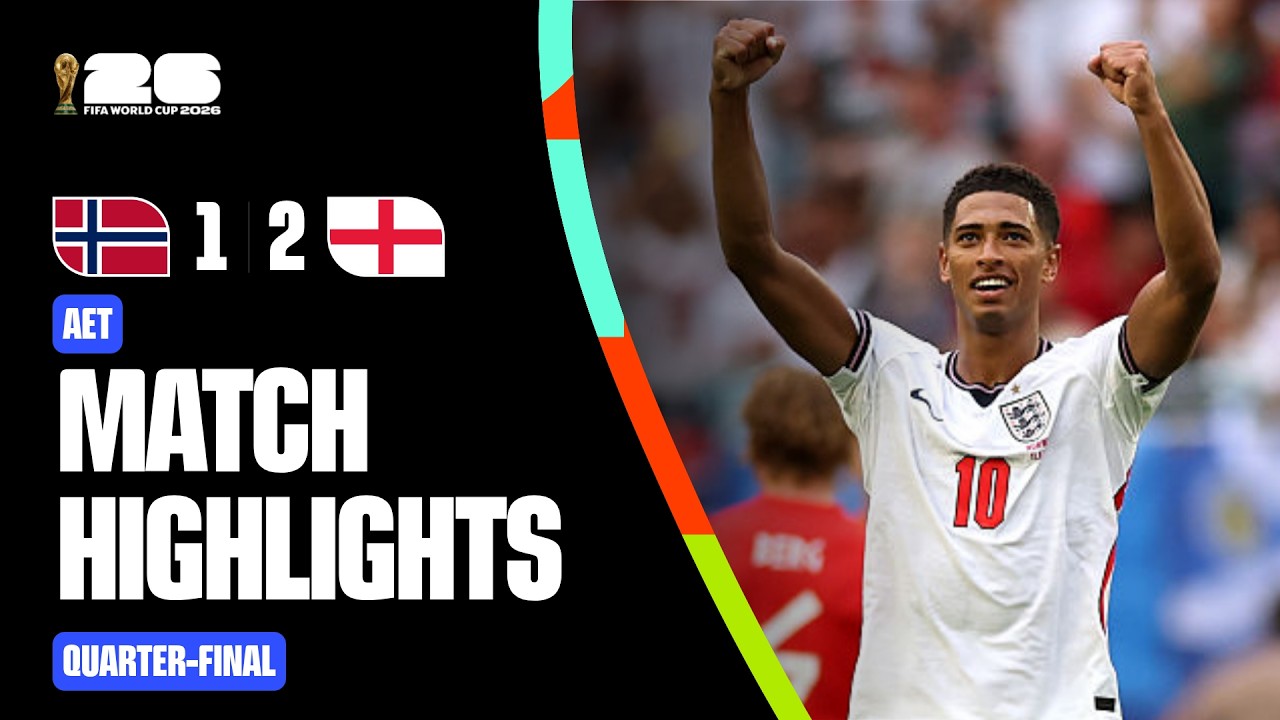
Bellingham's Cable-Assisted Equalizer Puts VAR and Laws of the Game Under Scrutiny
England's 2-1 extra-time win over Norway in the World Cup quarterfinal sent the Three Lions into the semifinals, but the story of the night was a freak moment just before halftime: a Norwegian goal kick that appeared to strike an overhead camera cable before falling to England, who countered and scored through Jude Bellingham. FIFA says its ball-sensor data shows no contact happened. Norway's manager isn't so sure.
What actually happened in Miami
England needed a hero, and once again it was Jude Bellingham who delivered, scoring twice — including the extra-time winner — as England beat Norway 2-1 after extra time to reach the World Cup 2026 semifinals. Norway had taken a shock lead through Andreas Schjelderup, who fired a shot that reportedly caromed off the post and into the top corner in the 36th minute to make it 1-0. For a spell it looked like Erling Haaland's Norway might pull off the upset that had eluded the country for decades, but England leveled through Bellingham right at the end of the first half.
The equalizer came from an unusual sequence. Norway goalkeeper Orjan Nyland's goal kick appeared to change direction sharply in midair, with broadcast footage suggesting the ball clipped one of the suspended cables used to run a robotically operated camera above the pitch — commonly known as a "spidercam" rig. The ball fell awkwardly, England pounced on the loose possession, and the move ended with Bellingham beating Nyland with a low finish to make it 1-1 in the second minute of first-half stoppage time (45+2), per FIFA's own account of the incident. The goal was checked by the video assistant referee and ultimately stood.
Norway then had a second-half goal chalked off following a VAR review that flagged an infringement by Haaland in the buildup, and a subsequent penalty award for England was itself overturned by VAR, adding to a chaotic run of officiating calls before the match went to extra time level at 1-1. Bellingham settled it three minutes into the additional 30 minutes, in the 93rd minute, sweeping in the rebound after Morgan Rogers' long-range effort was spilled by Nyland — his sixth goal of the tournament and a moment that made him the first player to score in successive World Cup knockout games since Diego Maradona in 1986. For more on how the sides lined up heading into the tie, see our Norway vs England quarterfinal preview.
The cable, the sensor, and what the Laws of the Game actually say
The controversy centers on a genuinely unusual rules question: what happens when the ball touches a fixed object suspended above the pitch, like a camera cable, rather than a person? Under IFAB's Laws of the Game, an overhead cable or camera rig hanging over the field counts as an "outside agent" if the ball makes contact with it while still over the field of play. When that happens, the referee is required to stop play immediately, and the restart is a dropped ball — awarded, broadly, to whichever side would otherwise have retained or gained possession, at the spot of contact. Crucially, if the ball is adjudged to have touched such an object, any goal that results from the sequence should not stand, because the passage of play should already have been stopped before it reached the net.
That is exactly why the incident mattered so much here: if the cable contact were confirmed, Bellingham's equalizer would reportedly have to be wiped from the record and replaced with a dropped ball where the deflection occurred — not a goal. FIFA, however, said its tracking technology found nothing. In a statement on the incident, FIFA said: "Before England's goal in minute 45+2 against Norway, the sensor in the Connected Ball showed no peak in the 'heartbeat of the ball' when in the air, and therefore no evidence that the ball touched the overhead wire and changed the movement of the ball." That data point — drawn from the connected-ball sensor system used across the tournament to help with offside and handball calls — was cited as the basis for VAR's decision to let the goal stand rather than intervene.
Norway boss Stale Solbakken was unconvinced by FIFA's explanation. Asked whether the cable deserved an assist on the goal, he said, "Yeah, it probably will," adding that "the ball fell straight down from the sky, so it changed its direction." On what referee Clement Turpin told him after the match, Solbakken said: "He said that he didn't see it himself and that he didn't get any message that it actually happened. Since FIFA says that there was no touch, he can't do anything about it. But the ball fell down straight in front of the bench, so it did." Pressed on whether the wire would define the tournament for Norway, he added, "I hope we can think about and talk about other things. That's my sincere hope. I hope that this will not be the story about this team." Norway's exit ends their run in the tournament; England now turn to the semifinal, with the broader knockout picture covered in our Day 32 results recap.
Haaland Sr. reacts, and the fallout continues
The Haaland family's frustration became part of the story too. Erling Haaland's father, Alf-Inge Haaland, watched from the stands as Norway's tournament ended in extra time, and reportedly reacted to the officiating with a sarcastic social media post reading "Well done Bellingham and referee," followed by another message stating, "Saved by the referee. Hope you win the WC now. But feel we got robbed today." Some outlets also reported that Alf-Inge Haaland made a crude gesture toward the pitch after a Norway penalty appeal was overturned by VAR in extra time, though that account rests on a single report and has not been corroborated elsewhere. Norway's elimination means Erling Haaland, one of the tournament's most closely watched forwards, will not feature in the semifinal stage, while attention elsewhere turns to ties like the one previewed in our Argentina vs Switzerland preview.
For England, the result — and the debate around it — does little to slow their momentum. Bellingham's brace took his tournament tally to six goals and cemented his status as the standout individual performer of the knockout rounds so far. But the cable incident is likely to keep echoing through discussions about officiating technology at this World Cup, particularly given how narrowly it turned on a sensor reading rather than a clear visual call. Whether or not the ball actually brushed the cable, the episode has renewed scrutiny of how pitch-side camera rigs are positioned and monitored at the sport's biggest tournament.
Frequently Asked Questions
It's disputed. Broadcast footage appeared to show the ball's flight path changing abruptly, and Norway's coaching staff believe it clipped the cable. FIFA says the connected-ball sensor recorded no impact and found no evidence of contact, and VAR did not overturn the goal on review.
Under the Laws of the Game, a suspended object like a camera cable is treated as an outside agent if the ball contacts it over the field of play. Play should be stopped immediately and restarted with a dropped ball at the point of contact, meaning a goal scored on that sequence would not stand if contact were confirmed.
After Andreas Schjelderup put Norway ahead in the 36th minute and Bellingham equalized right before halftime, the match went to extra time at 1-1. Bellingham scored the winner in the 93rd minute, converting the rebound after Nyland could only parry a long-range effort from Morgan Rogers, sealing a 2-1 win for England.