
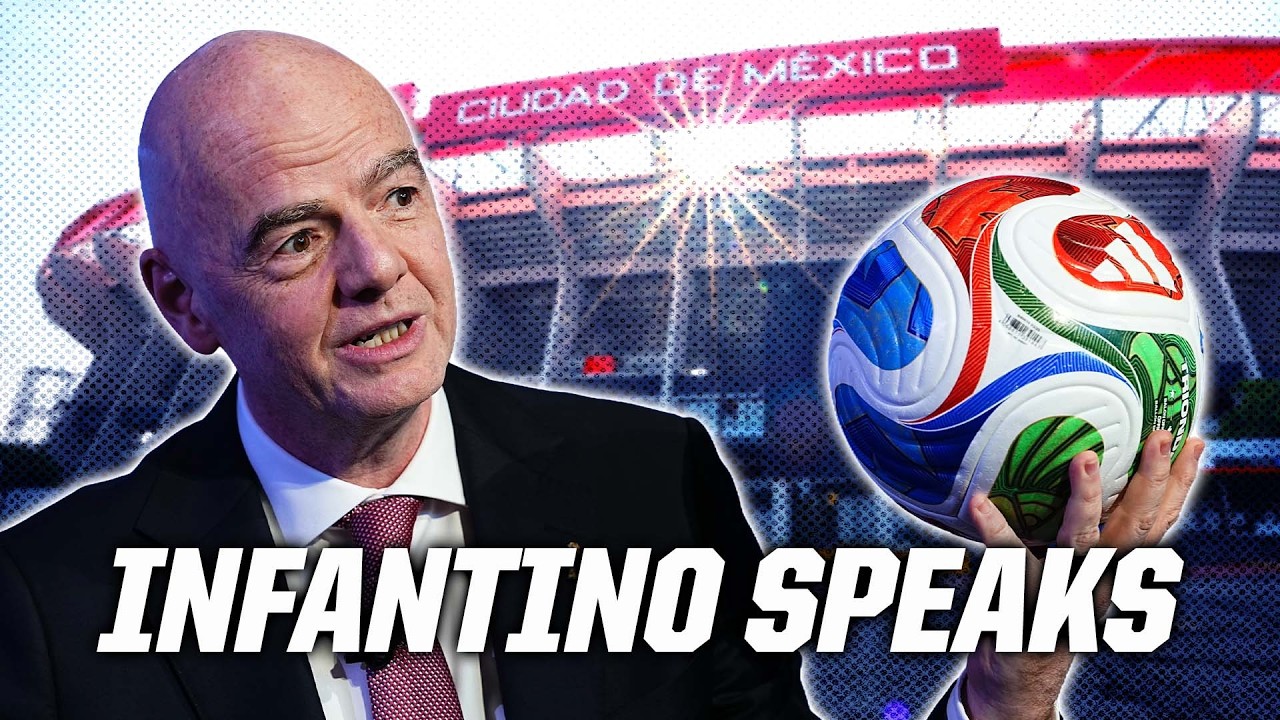
FIFA To Discuss 64-Team World Cup Expansion After 2026 Tournament
Gianni Infantino says growing the men's World Cup from 48 to 64 teams is "definitely an issue" FIFA will examine once the 2026 tournament wraps up, reviving a fight with UEFA and other confederations over how big football's showcase event should get.
What Infantino Actually Said
Speaking to Swiss broadcaster Blue Sport as the 2026 World Cup nears its climax, FIFA president Gianni Infantino confirmed that a further expansion of the tournament, from the current 48 teams to as many as 64, will be put in front of FIFA's committees once this summer's competition is finished. "That's definitely an issue that will be examined and discussed in the relevant committees after this World Cup," Infantino said, according to multiple outlets that reviewed the interview, including ESPN and Al Jazeera.
Infantino framed the idea as a matter of global fairness rather than simple growth for growth's sake. "When organizing a World Cup, it's important to organize it for the whole world, not just Europe and South America, but effectively the entire world," he said. "Every nation should be allowed to dream of participating in the World Cup." He pointed to the quality of play across confederations as evidence the game has caught up everywhere, adding that "the quality of teams is extremely high and getting higher all over the world."
Crucially, Infantino did not announce a decision, a vote, or a firm date. His comments describe a proposal that will be "examined and discussed" by FIFA's relevant committees after the current tournament concludes — no meeting date, deadline, or target for a final ruling has been made public. Any change would most plausibly apply to the 2030 World Cup, the centenary edition to be hosted primarily by Morocco, Portugal and Spain, with three ceremonial opening matches in Uruguay, Argentina and Paraguay, though FIFA has not confirmed the format for that tournament either.
Why Infantino Is Making the Case Now
Infantino's pitch leans heavily on how the expanded 48-team format has performed on the field this summer. He called the debut of the bigger tournament a "huge success," arguing that "every team played at a high level" and that "teams from every continent scored goals and earned at least one point." He specifically highlighted African representation, noting that nine of the ten African qualifiers reached the knockout stage in 2026, compared with just five African teams making the tournament at all under the old 32-team format. For readers following the run of results, our Day 32 results recap captures how tight the knockout rounds have been under the current 48-team setup.
That framing matters because it is the same argument FIFA used to justify the jump from 32 to 48 teams in the first place, a change that was itself controversial before the tournament began and is now being cited as proof the model works. Doubling down again, to 64 teams, would be the second expansion in less than a decade and would reportedly push the tournament toward a 128-match format, up from 104 matches this summer and 64 at the 32-team World Cups held through 2022.
A Debate FIFA Has Heard Before
The 64-team idea is not new — it was first floated in connection with South America's push, tied to Uruguay's role as a centenary host, and it has already drawn firm opposition from two of FIFA's most powerful confederations. UEFA president Aleksander Čeferin, who is also a FIFA vice president, has called the proposal "a bad idea," arguing that "it's not a good idea for the World Cup itself and it's not a good idea for our qualifiers as well." Čeferin has also questioned where the push originated, casting doubt on the South American-driven proposal.
The Asian Football Confederation has been just as blunt. AFC president Sheikh Salman bin Ibrahim Al Khalifa warned that reopening the team count invites an endless slippery slope: "If the issue remains open to change, then the door will not only be open to expanding the tournament to 64 teams, but someone might come along and demand raising the number to 132 teams. It would become chaos." Salman has argued the 2030 field was already settled at 48 and should stay there, though he has left the door open to revisiting the format for tournaments beyond 2034, which Saudi Arabia is set to host.
Opposition reportedly extends beyond public statements. A source close to FIFA's Council told the Guardian that Infantino "would not get that vote through Council even if he wanted to," adding that "the overwhelming feeling around the table, and not just in Europe, is that 64 teams would damage the World Cup." Player representatives have separately warned that the calendar is already stretched thin: FIFPRO, the global players' union, has described the current international match schedule as "unsustainable," and players including Thibaut Courtois and Rodri have raised the possibility of strike action over fixture congestion tied to the expanded 2026 format. Adding another 16 teams and dozens more matches, spread across three continents given the 2030 hosting arrangement, would deepen those player-welfare and travel concerns rather than ease them.
Pundits and fans are similarly split. Supporters echo Infantino's inclusivity argument, pointing to breakout performances from first-time or rarely-seen qualifiers this summer as evidence a bigger tournament rewards global development. Critics counter that more slots mean more mismatches in the group stage, diluting the intensity that makes the World Cup distinct from a bloated qualifying exercise, and risk "viewer fatigue" during an already-long month-plus tournament window. Some of that quality debate will be tested again soon: our France vs Spain semifinal preview looks at two of the tournament's traditional heavyweights, the kind of marquee matchup expansion skeptics say could get diluted if the tournament keeps growing.
Frequently Asked Questions
No. Infantino has only said the proposal will be "examined and discussed in the relevant committees" after the 2026 World Cup concludes. No meeting date, vote, or decision deadline has been announced publicly.
That is the tournament most commonly linked to the proposal, since 2030 is the next available edition and the idea was originally raised in connection with that centenary tournament, hosted by Morocco, Portugal and Spain with opening matches in Uruguay, Argentina and Paraguay. FIFA has not confirmed this, and the 2030 format currently remains 48 teams.
UEFA president Aleksander Čeferin has called it "a bad idea," and AFC president Sheikh Salman bin Ibrahim Al Khalifa has warned it would create "chaos." A source close to FIFA's Council has suggested the plan would struggle to pass a Council vote. Player union FIFPRO and some players have also raised broader concerns about fixture congestion that a larger tournament would likely worsen.