
USA Clinch World Cup 2026 Round of 32: Who Will USMNT Face on July 1 at Levi’s Stadium?
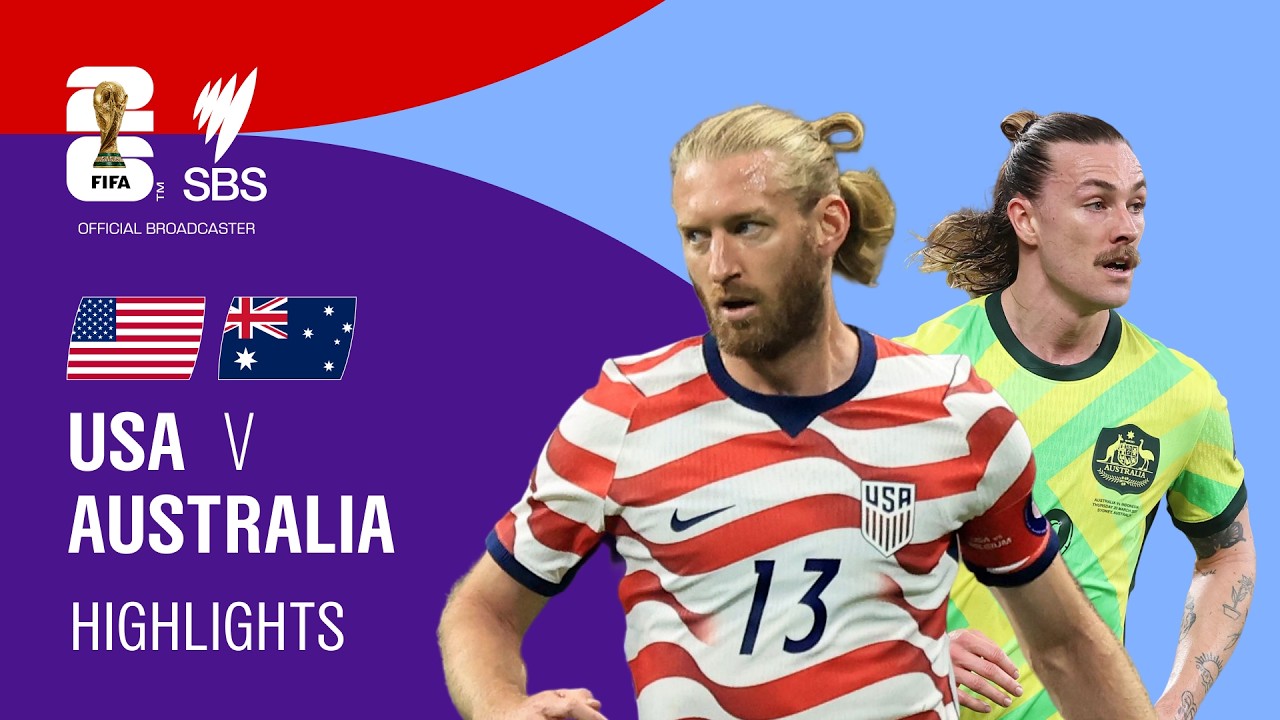
With a commanding 2-0 victory over Australia on June 19, 2026, the United States Men’s National Team has clinched Group D with a perfect six points from two games — becoming only the second team at this World Cup to secure a knockout-stage spot, joining Mexico in making an early statement on home soil.
How the USMNT Clinched Group D
The USMNT’s path through Group D has been nothing short of commanding. It began in Matchday 1 with a statement result against Paraguay — a thrilling 4-1 victory powered by a Folarin Balogun brace. The Arsenal striker, who has been one of the most dangerous forwards in the group stage, put the rest of the tournament on notice with a clinical display that showed exactly why anticipation had been building around this US squad heading into their home World Cup.
But if the Paraguay win was a confidence-builder, the June 19 clash against Australia at SoFi Stadium was a masterclass in composure and tactical discipline. The Socceroos came into the match with something to prove, needing a result to stay alive in the group. Instead, they were dismantled systematically by a USMNT side that never looked in danger.
The opening goal arrived in the 11th minute through a Cameron Burgess own goal — the Australian center-back, under pressure from a well-worked set piece, turned the ball into his own net to give the USA an early cushion. It was the kind of moment that shifts momentum irrevocably, and the US took full advantage of it. Rather than sitting back, they continued to press and attack, keeping the Socceroos pinned in their own half for long stretches of the first half.
The second goal came just before half-time, and it was the moment of the match. Alex Freeman — just 21 years old and plying his trade at Villarreal CF in Spain after graduating from the Orlando City academy — rose highest inside the box and delivered a powerful header that left the Australian goalkeeper rooted to the spot. The clock read 43 minutes, and the United States were effectively through to the Round of 32 before the half-time whistle had even sounded.
For Freeman, the significance of the goal extended well beyond the match result. At 21 years old, he became the youngest American to score a header at a World Cup since 1930 — a piece of history that underscores just how raw yet exceptional the talent in this current US generation truly is. His trajectory from Orlando City’s academy to the Villarreal setup in Spain, and now goalscorer on the biggest stage in world football, is the kind of story the sport was made to tell.
The second half saw the USA manage the game with intelligence and poise, protecting their lead without inviting undue pressure. Australia had flashes of quality — as any team that reaches a World Cup will — but they could not find a way through a disciplined US defensive structure. The final whistle confirmed the 2-0 scoreline and, with it, six points from six, top of Group D, and a guaranteed place in the Round of 32.
| Match | Date | Result | Scorers |
|---|---|---|---|
| USA vs Paraguay (MD1) | June 2026 | 4-1 W | Balogun (x2) |
| USA vs Australia (MD2) | June 19, 2026 | 2-0 W | Burgess OG (11’), Freeman (43’) |
The Round of 32 Draw — Potential Opponents
As Group D winners, the United States will face the runner-up from one of five groups: Group B, Group E, Group F, Group I, or Group J. The Round of 32 match is scheduled for July 1 at Levi’s Stadium in Santa Clara, California — a venue that will give the USMNT an enormous home-crowd advantage, situated in the heart of the Bay Area where American soccer passion has been steadily growing for decades.
The identity of their opponent will depend on how the remaining group-stage matches conclude, but all five potential runner-up slots offer a fascinating set of scenarios for the US coaching staff to prepare for. Let’s break down each possible match-up:
Group B Runner-Up
Group B has featured some of the most competitive football in the tournament’s opening rounds. The runner-up from this group would arrive battle-tested and with momentum, but the US will fancy their chances at home. The tactical preparation here would center on scouting for teams that play with a high defensive line — something Freeman’s aerial ability and Balogun’s pace could exploit ruthlessly.
Group E Runner-Up
Group E has produced some of the tournament’s most attacking football. A runner-up from this group would likely be a team that concedes goals — offering the US an opportunity to impose their direct, transition-heavy style of play. Gregg Berhalter’s side, or whoever is leading the technical staff, will see this as one of the more favorable potential draws.
Group F Runner-Up
Group F has been defined by physicality and set-piece quality. A runner-up from this group would test the USMNT’s defensive resolve and aerial ability at both ends. Given the fitness concerns around Christian Pulisic (more on that below), the midfield structure will be crucial against a physical Group F side.
Group I Runner-Up
Group I has produced a clear hierarchy at the top, meaning the runner-up would be a team that has been inconsistent — dangerous on their day, but potentially vulnerable to a confident, organized opposition. The US’s six-point haul from two games projects calm authority that could unsettle a Group I side still searching for their best form.
Group J Runner-Up
Group J may produce the wildcard of the potential match-ups. Depending on late results, the runner-up here could be a team that squeezed through on goal difference or late drama — potentially fatigued or mentally drained. That scenario would play directly into the hands of a fresh, confident USMNT squad that has already secured their progression with a game to spare.
Regardless of the opponent, the structural advantage of playing at Levi’s Stadium cannot be understated. The Bay Area’s large Latin American and soccer-passionate community will ensure that even if the opposition brings traveling support, the US will be backed by a wall of noise that has historically proven decisive in tight knockout matches.
Pulisic Injury Concern
The one dark cloud hanging over what has otherwise been an almost perfect start to the tournament is the fitness of Christian Pulisic. The AC Milan attacking midfielder — widely regarded as the most important and influential player in USMNT history when at his best — sustained a calf injury during the Paraguay match in Matchday 1 and was absent entirely for the Australia game on June 19.
Pulisic’s absence was felt in the creative department against Australia, even if the result never suggested the US were short of quality. His ability to carry the ball under pressure, draw fouls in dangerous areas, and deliver in big moments has been the cornerstone of the US’s attacking identity for the better part of a decade. Without him, the team becomes more predictable — more reliant on the direct running of Freeman and the hold-up play of Balogun — and less capable of unlocking a deep defensive block through individual brilliance.
The good news is that the US have confirmed Pulisic is being monitored day by day and the medical staff is optimistic about his chances of returning before the Round of 32. With eleven full days between the Australia match and the July 1 fixture at Levi’s Stadium, there is a genuine belief within the camp that the captain could be available for the knockout stage. A calf strain of this nature, if not severe, typically carries a recovery window of one to two weeks — putting Pulisic’s return on a knife’s edge but well within the realm of possibility.
Should Pulisic return, even at 80 or 85 percent fitness, the dynamic of the team changes significantly. His presence alone forces opposing defenders to track him obsessively, which in turn opens space for Balogun centrally and Freeman on the flanks. The depth of quality around him — players like Weston McKennie, Tyler Adams, and Gio Reyna — means the US are far from a one-man team, but Pulisic’s leadership and quality in the final third remain irreplaceable at this level.
What History Says
The United States Men’s National Team has a complicated but ultimately proud history in World Cup knockout football. Their best-ever finish remains the semifinal appearance in 1930, when the tournament was in its infancy and the competition structure was fundamentally different from the modern format. That historical footnote — alongside Freeman’s record-tying header — serves as a reminder that the current generation carries a torch that stretches back nearly a century.
In the modern era, the USMNT’s knockout record has been a mix of memorable highs and heartbreaking exits. The 2002 World Cup in South Korea and Japan stands as the high-water mark of the modern generation, with the US reaching the quarterfinals before falling to Germany. That team, led by Brian McBride, Landon Donovan, and Claudio Reyna, captured the imagination of an entire nation and helped cement soccer’s slow but steady rise in American sporting culture.
The 2010 tournament in South Africa brought another Round of 16 run, with Donovan’s iconic last-gasp goal against Algeria in the group stage — one of the most celebrated moments in US soccer history — propelling them into the knockouts before a narrow 2-1 defeat to Ghana ended their run. The 2014 edition saw another exit to Belgium in extra time, a match that showcased the talent of a young Tim Howard, who made a record-breaking 16 saves in a single World Cup game.
After the painful absence from the 2018 World Cup — a failure to qualify that shook American soccer to its foundations — the 2022 tournament in Qatar saw a promising but ultimately frustrating exit in the Round of 16 to the Netherlands. That Dutch side were arguably the USMNT’s toughest possible draw at that stage, and yet the US competed admirably before falling 3-1.
Now, in 2026, with the tournament on home soil and a new generation of technically developed players — many of whom ply their trade at top European clubs — the sense of possibility is palpable. Six points from the group stage, zero goals conceded in the second match, and the emergence of players like Alex Freeman as genuine world-class performers all point to a team that is not merely participating in this World Cup but genuinely competing to make a historic run. History says the quarterfinals are the ceiling for this program; this squad looks determined to break through it.
Frequently Asked Questions
The United States will play their Round of 32 match on July 1, 2026 at Levi’s Stadium in Santa Clara, California (Bay Area). The exact kick-off time will be confirmed once the full bracket is set following the completion of Group D’s Matchday 3, but the venue and date are confirmed. Levi’s Stadium, home of the San Francisco 49ers, has a capacity of approximately 68,500 and will be packed with passionate American soccer supporters.
As Group D winners, the USA will face the runner-up from one of five groups: Group B, Group E, Group F, Group I, or Group J. The exact opponent will be determined once those groups complete their final matchday. All five potential opponents represent different tactical challenges, but the US coaching staff will have multiple days to analyze and prepare for whichever team emerges from those standings. The draw bracket will be fully locked in by the time all group play concludes.
Christian Pulisic suffered a calf injury during the USA’s opening Group D win over Paraguay and did not feature in the 2-0 victory over Australia on June 19. As of now, he is listed as day-to-day and is undergoing intensive treatment with the team’s medical staff. With eleven days between the Australia match and the July 1 Round of 32 fixture, there is cautious optimism that he could return to full or near-full fitness in time. The USMNT will provide an updated injury report closer to the match. His return would be a massive boost to American chances in the knockout stage.