
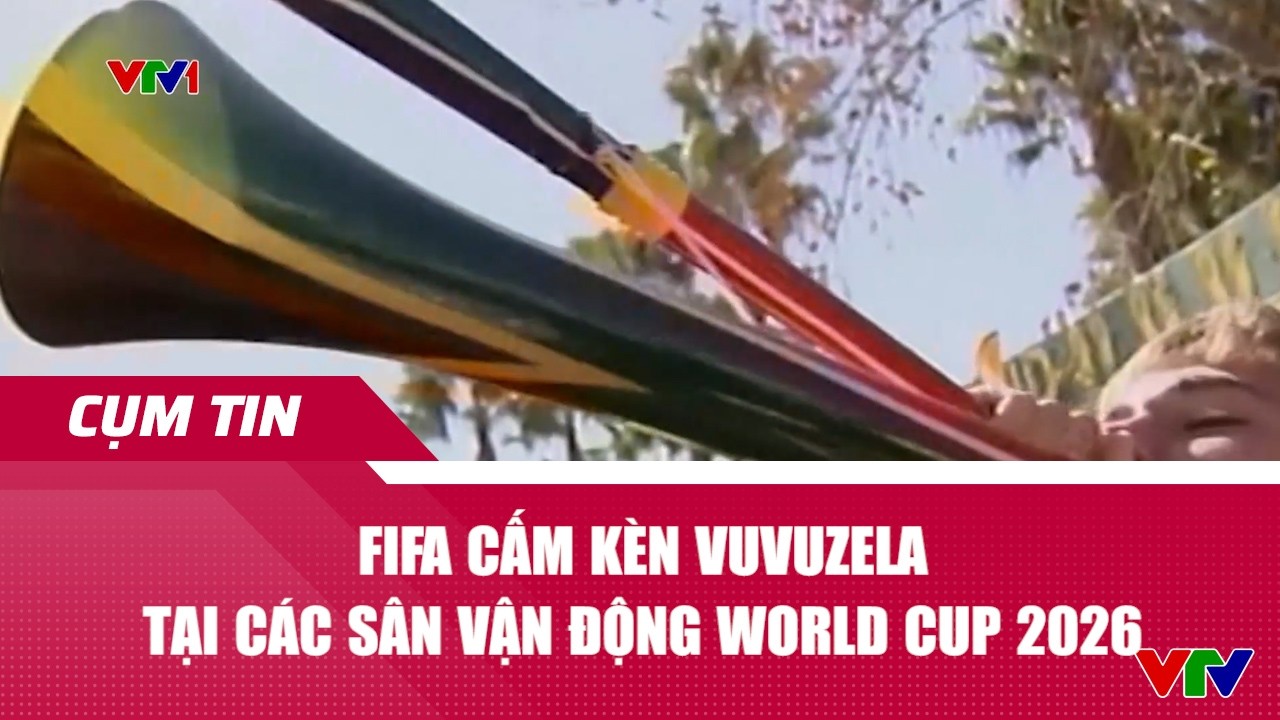
Vuvuzelas Banned at FIFA World Cup 2026: Full List of Prohibited Stadium Items
With just five days until the opening whistle at Estadio Azteca, FIFA has confirmed that vuvuzelas, laser pointers, umbrellas and dozens of other items are strictly prohibited inside all 16 tournament venues — here is everything fans attending matches need to know before heading to the stadium.
FIFA Makes It Official: No Vuvuzelas in 2026
The plastic horn that defined the soundtrack of the 2010 FIFA World Cup in South Africa will not be heard inside any of the 16 stadiums hosting the 2026 tournament across the United States, Canada and Mexico. FIFA has published a comprehensive 35-page Stadium Code of Conduct that explicitly bans vuvuzelas along with a wide range of noise-making devices, personal items and behaviors that the governing body deems incompatible with safe, enjoyable and broadcast-friendly match environments.
The decision, which has drawn significant reaction from football fans worldwide, marks a decisive shift in how FIFA intends to manage the atmosphere at what will be the largest World Cup in history — a 48-team, 104-match tournament spread across three countries and 16 iconic venues. For fans who were planning to recreate the legendary buzz of South Africa 2010, the ruling is unambiguous: leave your vuvuzela at home.
The ban covers every single venue on the 2026 schedule, from MetLife Stadium in New Jersey — where the Final will be played on July 19 — to Estadio Azteca in Mexico City, which will host the tournament's opening match on June 11, and BC Place in Vancouver, where Canada plays its first home World Cup game in over four decades.
Why FIFA Banned the Vuvuzela
The decision is not arbitrary. FIFA identified three primary concerns that drove the prohibition of vuvuzelas and similar noisemakers from 2026 World Cup venues.
Player and referee communication: At 120 decibels, a stadium full of vuvuzelas makes it nearly impossible for players to hear tactical instructions from coaches or for referees to communicate effectively with players on the pitch. In a tournament where margins are minimal and split-second decisions define careers, FIFA determined that allowing such devices created an unacceptable impediment to sporting integrity.
Broadcasting quality: The 2010 World Cup is remembered as much for its television coverage being overwhelmed by the constant drone of vuvuzelas as it is for the football itself. Many broadcasters and viewers complained that commentary was rendered inaudible. With the 2026 tournament set to be broadcast to a global audience of hundreds of millions — and with YouTube partnering officially with FIFA for streaming coverage — protecting broadcast quality was a clear institutional priority.
Fan safety and emergency communication: In an emergency situation inside a packed stadium, clear public address announcements are critical. Devices that produce continuous noise at near-damaging decibel levels pose a direct risk to the ability of stadium staff and emergency services to communicate with crowds. FIFA's modern security protocols, refined over successive major tournaments, place crowd management communication at the centre of venue safety planning.
Complete List of Prohibited Items at 2026 World Cup Stadiums
The 35-page Stadium Code of Conduct goes well beyond vuvuzelas. Fans attending any of the 104 matches at the 2026 FIFA World Cup should be aware of the following comprehensive list of prohibited items and behaviors:
| Category | Prohibited Items / Behaviors |
|---|---|
| Noisemakers | Vuvuzelas, whistles, air horns, loudspeakers, any device producing excessive or disruptive noise |
| Safety hazards | Laser pointers and any device capable of emitting laser beams |
| Containers | Reusable water bottles, cans, jars, cups and similar items (single-use cups provided at concessions) |
| Obstructive items | Umbrellas of any size (including compact folding umbrellas), portable folding chairs, seat cushions with zips or pockets |
| Child equipment | Prams and pushchairs (strollers) |
| Dress code | Body paint is not considered clothing; streaking, flashing and exposing intimate body parts are explicitly banned |
| Electronic devices | Professional recording equipment without accreditation; devices with lenses over a specified focal length |
It is worth noting that standard earplugs, foam fingers, scarves, flags and banners — provided they do not contain offensive content — remain permitted. Fans are encouraged to check the official FIFA website and their specific venue's guidelines before matchday, as some stadiums may apply additional local restrictions on top of the FIFA baseline code.
The Vuvuzela's Legacy: From Soweto to South Africa 2010
To understand why the vuvuzela ban carries such emotional weight, it is necessary to appreciate what the instrument represents in the story of African football. The vuvuzela — a long, single-note plastic horn — has roots in traditional South African fan culture and was already a fixture at local league matches long before it became a global phenomenon. When South Africa hosted the 2010 World Cup, the first ever held on African soil, the vuvuzela became the defining sonic symbol of an entire tournament.
During South Africa 2010, FIFA received tens of thousands of complaints from viewers and broadcasters about the relentless drone that filled every stadium from kick-off to final whistle. At the time, FIFA President Sepp Blatter refused to ban them, famously describing the vuvuzela as part of Africa's football culture. That decision was controversial but ultimately cemented the instrument's place in World Cup folklore.
For many South African and African football fans, the vuvuzela is not merely a noisemaker — it is a symbol of belonging and cultural expression on the world stage. The ban at 2026 has reignited that debate, with critics arguing that FIFA is sanitising the atmosphere of international football to suit the preferences of broadcasters and corporate sponsors, while supporters of the decision point to genuine safety and sporting integrity concerns.
What Fans Can Expect Instead
FIFA is not leaving match-day atmosphere entirely to chance. The governing body has invested heavily in in-stadium entertainment production, including curated sound systems, pre-match shows and coordinated supporter sections. At venues like SoFi Stadium in Los Angeles and Hard Rock Stadium in Miami, state-of-the-art acoustics and giant scoreboards are designed to amplify crowd energy without relying on individual noise-making devices.
The 2026 Opening Ceremony, scheduled for June 11 at Estadio Azteca, will feature major musical performances — further evidence that FIFA intends to shape the tournament's sonic identity through curated entertainment rather than organic crowd instruments. You can read about all confirmed performers in our complete Opening Ceremony guide.
Supporters attending matches across the 16 tournament venues are encouraged to arrive early, allow extra time for security screening with the expanded prohibited items list, and coordinate with their national supporter groups about permitted materials for banner displays and coordinated chants.
Frequently Asked Questions
Yes. The prohibition applies uniformly across all 16 venues in the United States, Canada and Mexico, covering every one of the 104 matches from the Group Stage through to the Final at MetLife Stadium on July 19, 2026.
No. FIFA's Stadium Code of Conduct prohibits reusable water bottles, cans, jars and similar containers. Single-use cups are available at stadium concession stands. Fans with medical requirements should check with their specific venue's accessibility services team for exemptions.
FIFA's code explicitly bans umbrellas of any size — including compact folding ones — on the grounds that they can obstruct the view of other spectators and, in extreme cases, be used as weapons. Given the packed crowds expected at major venues, organisers have prioritised unobstructed sightlines and crowd safety.
Security staff at all 16 venues will conduct bag checks and item screening at entry points. Prohibited items will be confiscated and will not be returned. In cases involving items classified as potential safety risks — such as laser pointers — further action may be taken in coordination with local law enforcement.
Stadium atmosphere at World Cups is driven primarily by passionate supporters, coordinated chants and the drama of the football itself. Drums, flags, scarves and coordinated vocal displays remain fully permitted. FIFA and the Local Organising Committee have also invested in in-stadium entertainment infrastructure at all 16 venues to enhance the matchday experience.