
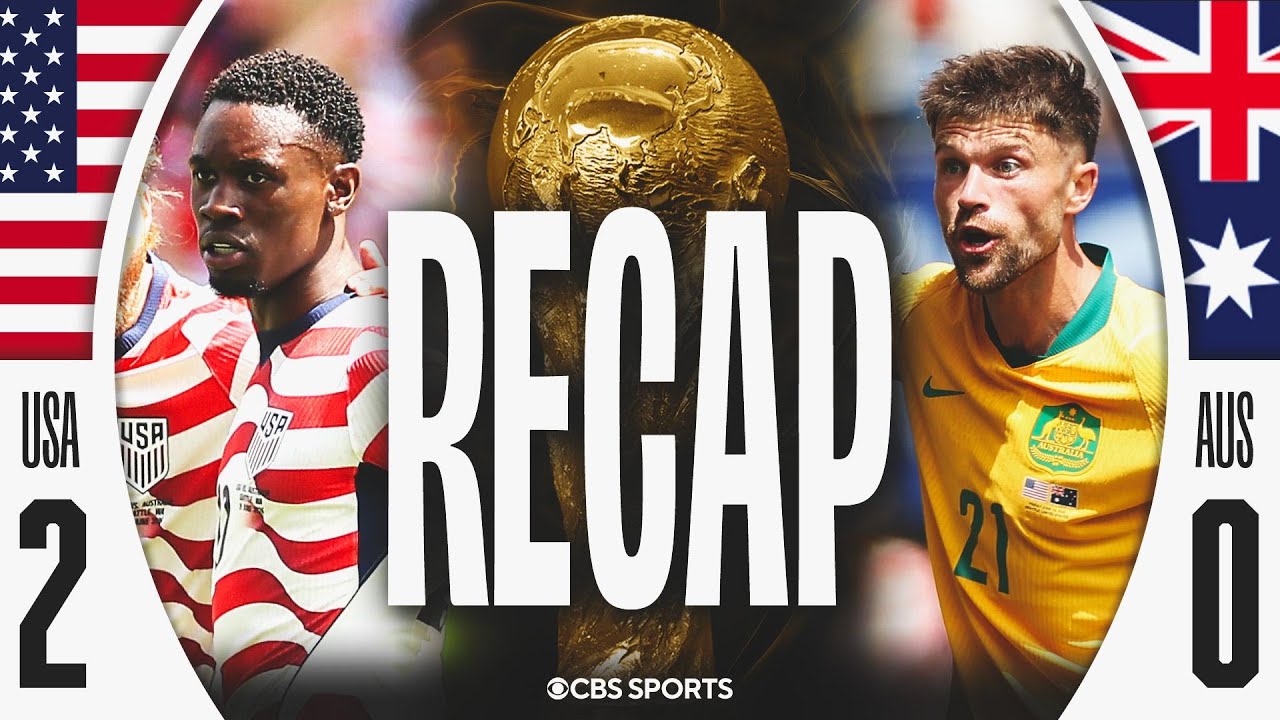
Who Is Alex Freeman? Meet USMNT's 21-Year-Old World Cup Star Who Made History Against Australia
On June 19, 2026, in front of a roaring home crowd, a 21-year-old right-back from Fort Lauderdale, Florida rose above the Australian defense and powered a header into the net — etching his name into the record books and sending the United States one step closer to World Cup glory. His name is Alex Freeman, and the world is only just getting started with him.
From Fort Lauderdale to La Liga
Alex Freeman was born and raised in Fort Lauderdale, Florida, a city with a growing soccer culture and a deep pipeline into professional football. From an early age, Freeman's athleticism, pace, and natural reading of the game made him stand out in youth circuits across the Sunshine State. It wasn't long before Orlando City SC — one of MLS's most active developers of homegrown talent — identified him as a player worth investing in.
Freeman rose through Orlando City's renowned academy system, earning his stripes in the competitive environment of MLS NEXT before eventually breaking into the first team. The transition from academy to professional football is notoriously difficult, yet Freeman made it look almost seamless. His ability to bomb down the right flank with explosive pace, deliver precise crosses, and track back defensively made him a coaches' favorite from the moment he arrived on the senior scene.
His reputation grew steadily through 2024, but it was 2025 that truly changed everything. A spectacular breakthrough campaign in Major League Soccer caught the attention of European scouts, and on January 29, 2026, Freeman completed a transfer to Villarreal CF in La Liga — one of Spain's most prestigious and forward-thinking clubs. He marked his debut in the Yellow Submarine's colors with a 4-1 victory over Espanyol, immediately showing La Liga audiences what American soccer had been talking about for months.
The leap from MLS to Spain's top flight is one that many American players have attempted but few have navigated as smoothly. Freeman's combination of athleticism, tactical intelligence, and an insatiable work rate gave him the tools to not just survive in La Liga — but to thrive.
The 2025 Breakout Season
If there was one year that put Alex Freeman on every serious soccer fan's radar, it was 2025. Playing for Orlando City SC in MLS, Freeman delivered a campaign that transcended the expectations typically placed on a player his age. He didn't just contribute — he dominated, season after season stats that rivaled established veterans across the league.
| Stat | 2025 MLS Season |
|---|---|
| Appearances | 34 |
| Goals | 6 |
| Assists | 3 |
| Awards | MLS Young Player of the Year, MLS All-Star, MLS Best XI |
Six goals and three assists from a right-back in a single MLS season is a remarkable return — numbers that speak to Freeman's attacking instincts and his willingness to arrive late into dangerous areas. His overlapping runs became a signature weapon for Orlando City, stretching opposition defenses and creating space for his teammates in the final third.
The individual accolades reflected what the numbers already told: Freeman was named MLS Young Player of the Year 2025, a recognition that cemented his status as the league's most exciting young talent. He also earned a spot in the MLS All-Star Game and was selected to the MLS Best XI — an honor that placed him among the very finest players in North American soccer that season, regardless of position or age.
For a player who had only recently stepped out of the academy, these achievements were extraordinary. But for those who had watched Freeman closely, they were hardly surprising. His technical quality, his football IQ, and above all his desire to constantly improve suggested that 2025 was not a ceiling — it was a launching pad.
Rising Through the USMNT Ranks
International recognition followed domestic success quickly. Freeman made his USMNT debut on June 7, 2025, in a friendly against Turkey — a match that gave head coach Gregg Berhalter a chance to assess his most exciting young prospect in a competitive but low-stakes environment. Freeman did not disappoint, showcasing the energy and directness that had made him such a sensation in MLS.
But it was November 2025 that truly announced Freeman as a force in the national team setup. Playing at Raymond James Stadium in Tampa, Florida — essentially a home game for the Fort Lauderdale native — Freeman produced a stunning brace against Uruguay as the United States ran out emphatic 5-1 winners. The performance silenced any lingering doubts about whether his club form would translate to the international stage. Two goals against a Uruguay side known for its defensive resilience was a statement of intent from a player seemingly born for the biggest occasions.
By the time the 2026 FIFA World Cup squad was announced, Freeman's inclusion was a formality. The question was never whether he would be there — it was how large a role he would play on the sport's grandest stage. His performances through qualifying and friendlies had earned him a starting berth at right-back, a position he had made entirely his own in the USMNT system.
His viral TikTok moment — a behind-the-scenes clip that spread rapidly across social media and earned him a playful new nickname among fans — added another dimension to his public profile, showing a personality as vibrant and likeable off the pitch as he is dynamic on it. In an era when players are brands as much as athletes, Freeman's natural charisma has helped him build a connection with supporters that goes beyond football.
The World Cup Moment — Header vs Australia
June 19, 2026. Group D. USA vs Australia. The stakes were high, the atmosphere electric, and the United States needed a performance to announce themselves as genuine contenders on home soil. They got exactly that — and Alex Freeman was at the very heart of it.
The opening stages of the match saw both teams feeling each other out, with Australia well-organized and difficult to break down. The Socceroos had come into the tournament with a reputation for defensive discipline and physicality, and they were determined to make life difficult for the host nation. But on the 43rd minute, the deadlock was broken in spectacular fashion.
A meticulously worked move down the right flank found Freeman in space — his overlapping run perfectly timed to exploit a gap in the Australian shape. The delivery into the box was pinpoint, and Freeman, arriving with the conviction and composure of a player far beyond his years, launched himself into the air and met the ball with a powerful, diving header that gave the Australian goalkeeper absolutely no chance. The ball thundered into the net. USA 2-0 Australia.
The stadium erupted. Freeman wheeled away in celebration, arms outstretched, a grin spreading across his face that captured everything — the years of hard work, the sacrifices, the belief that had carried him from the Florida academies to the biggest stage in world football. His teammates mobbed him. The fans roared. A star was born.
The United States went on to win the match 2-0, securing a crucial three points in Group D and taking a significant step toward the knockout stages of the 2026 FIFA World Cup. Freeman's header was not just a goal — it was a moment, one of those rare instances where a young player steps up under maximum pressure and delivers something extraordinary. The image of Freeman rising above the Australian defense will be one of the defining images of this tournament for American supporters.
What Freeman's Rise Means for American Soccer
The emergence of Alex Freeman at the 2026 FIFA World Cup is more than just a feel-good story about a talented kid from Florida — it is a signal that the American soccer ecosystem is maturing in ways that were unimaginable a generation ago. The academy-to-MLS-to-Europe pipeline that Freeman has navigated represents exactly the kind of developmental pathway that U.S. Soccer has spent years trying to build. His trajectory — from Orlando City's youth ranks to MLS stardom to La Liga to a World Cup goal at 21 — is a proof of concept for the entire American football structure.
What makes Freeman's rise particularly significant is the position he plays. Right-back has historically been one of the more difficult positions for American players to develop at the highest level, yet Freeman has made the role his own both at club and international level. His blend of defensive solidity, physical dynamism, and genuine attacking quality represents a modern full-back profile that elite European clubs covet — and his move to Villarreal confirmed that the game's top decision-makers see him as exactly that kind of player.
Beyond the tactical and structural implications, Freeman's story resonates because of where he comes from. Fort Lauderdale is not traditionally considered a soccer hotbed in the way that some other American cities are. His success is a reminder that talent exists everywhere across this vast and diverse country — and that when the right development structures are in place, that talent can reach the very highest levels of the game. For every young player watching Freeman's header against Australia and dreaming of their own World Cup moment, his story is proof that the dream is achievable. American soccer has never needed that kind of inspiration more than it does right now, on home soil, in the summer of 2026.
Frequently Asked Questions
Alex Freeman was 21 years and 314 days old at the time of the 2026 FIFA World Cup, making him one of the youngest players in the USMNT squad and the youngest American to score a header at a World Cup since 1930.
Alex Freeman plays for Villarreal CF in La Liga, Spain's top-flight football league. He completed his transfer from Orlando City SC (MLS) on January 29, 2026, and made his debut in a 4-1 victory over Espanyol.
Alex Freeman is the youngest American player to score a header at a FIFA World Cup since 1930. He achieved this feat in the 43rd minute of the USA vs Australia Group D match on June 19, 2026, heading home the second goal in a 2-0 United States victory.