
Brazil Reclaim World Cup Goals Record From Germany: How Cunha's Brace Made History With Goal No. 241
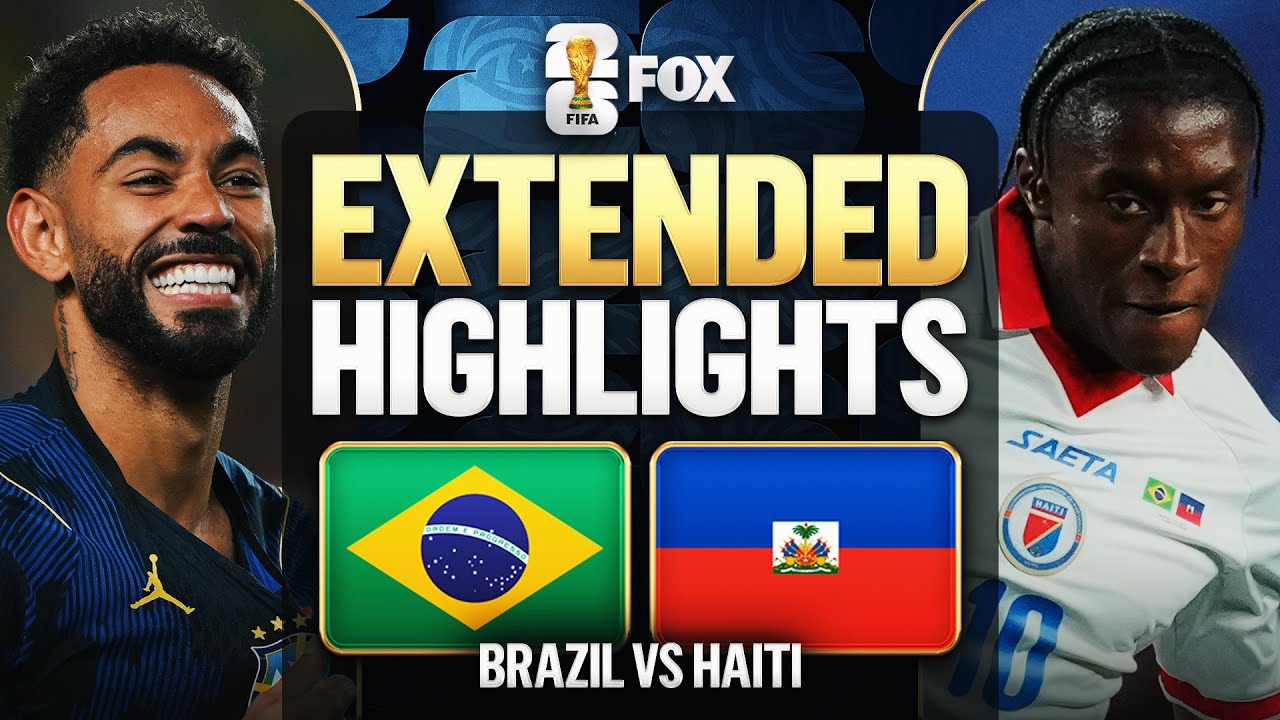
On the evening of June 19, 2026, Brazil did more than defeat Haiti 3-0. They rewrote the record books. With Matheus Cunha's second goal on the night and Vinicius Jr's clinical finish moments before the whistle, the Selecao surged past Germany to reclaim — and extend — the all-time FIFA World Cup goals record with 241 strikes across 22 editions of the greatest tournament in football history.
Germany's Brief Reign — What Happened in Group E
For the better part of a century, Brazil had held an iron grip on the record for the most goals scored in FIFA World Cup history. No nation had come close. But on Day 4 of the 2026 World Cup, June 14, Germany served notice that the reign was not guaranteed. In a breathtaking dismantling of Curaçao, the four-time world champions poured in seven unanswered goals, finishing with a 7-1 victory that sent shockwaves across the tournament and beyond.
That result pushed Germany's all-time World Cup goal tally to 239 — surpassing Brazil's then-standing total and, for the first time in modern memory, placing the Die Mannschaft atop the all-time scoring charts. The footballing world took notice. Records that had stood for decades rarely fall, and rarely do they fall in such dramatic fashion. Germany's clinical, relentless performance against Curaçao was a reminder of why they remain one of the sport's most formidable nations across every era.
The 7-1 scoreline carried particular weight in the collective imagination of football fans: it was precisely the same margin by which Germany had humiliated Brazil in the 2014 World Cup semi-finals in Belo Horizonte — the infamous Mineirazo, a night seared into the memories of every Brazilian supporter. That Germany chose a 7-1 to seize the goals record from Brazil seemed, to some, almost too poetic. Almost too cruel.
Germany entered the 2026 tournament having already established themselves as one of only two nations ever to surpass 200 World Cup goals. With Miroslav Klose's legendary 16-goal haul standing as the all-time individual record for a single player at World Cups, Germany have long been associated with ruthless efficiency in front of goal. The Group E hammering of Curaçao was simply the latest chapter in that story — and for five days, it was enough to unseat the Selecao from the summit of football's most coveted statistical throne.
But Brazil were watching. And Brazil were ready to respond.
Brazil Strike Back — The Historic Third Goal Against Haiti
Group C of the 2026 FIFA World Cup brought Brazil face-to-face with Haiti on June 19, and while the fixture on paper appeared a mismatch, the subtext was enormous. Brazil entered the game sitting on 238 World Cup goals — one behind Germany's newly minted record. Every goal would be counted, analyzed, and celebrated not just for its points value but for its place in the ledger of history.
Matheus Cunha, the dynamic Manchester City forward, needed just 23 minutes to begin that accounting. Carrying the ball with the kind of directness that has defined his club career, Cunha found space in the Haiti half, drove at the retreating defence, and slotted the ball home with composed precision. Brazil 1-0 Haiti. World Cup goal number 239 for the Selecao — level with Germany.
The crowd inside the stadium held a collective breath. One more goal. That was all it would take. Thirteen minutes later, Cunha provided it himself. In the 36th minute, the Manchester City attacker completed a magnificent individual brace, finishing clinically to send Brazil ahead 2-0. As the net rippled, the number 240 flashed across screens in broadcast trucks and fan zones around the globe. Brazil had surpassed Germany. The record was back where much of the footballing world believed it belonged.
But Brazil were not finished writing history. In the dying seconds of first-half stoppage time — the 45th minute plus three — Vinicius Jr put the seal on a dominant first-half display, charging forward with his characteristic combination of pace and instinct to slot home Brazil's third. The scoreline read 3-0. Brazil's all-time World Cup goal tally read 241. The record was not merely reclaimed — it was extended.
For Carlo Ancelotti, the legendary Italian coach who took charge of Brazil ahead of the 2026 campaign, the win over Haiti represented a first World Cup victory as a manager — an achievement that had eluded even the most decorated club coach of his generation across a glittering career that includes multiple Champions League titles. To achieve it while simultaneously overseeing the most prolific goal-scoring moment in Brazilian World Cup history added a layer of significance that transcended the result itself.
In the stands, yellow and green flooded every corner of the stadium. On pitches and in living rooms from Rio de Janeiro to Sao Paulo, from Tokyo to Lisbon, fans of the Selecao understood what they had witnessed. This was not simply a 3-0 Group C win. This was Brazil asserting, once again, that their place in the pantheon of football is unique, unmatched, and in no danger of being ceded without a fight.
Brazil's World Cup Legacy — By the Numbers
To understand why this record matters, you must understand the scope of Brazil's World Cup history. No nation has participated in every single edition of the tournament — all 22 editions played since the inaugural 1930 competition in Uruguay — except Brazil. That perfect attendance record is the foundation upon which 241 goals have been built, but it does not tell the whole story. Brazil have not simply shown up. They have dominated, dazzled, and delivered on the grandest stages the sport has to offer.
Five World Cup titles. Joint record with Germany. Achieved across four different decades on four different continents, with squads that ranged from the mercurial artistry of the 1970 side — widely regarded as the greatest team ever assembled — to the steely pragmatism of the 1994 and 2002 champions. Each triumph had its own character, its own heroes, its own goals that entered the mythology of the game.
| Year | Host | Result | Key Scorers |
|---|---|---|---|
| 1958 | Sweden | Champions (5-2 vs Sweden in Final) | Pele (6 goals), Vava (5 goals), Garrincha (1 goal) |
| 1962 | Chile | Champions (3-1 vs Czechoslovakia in Final) | Amarildo (3 goals), Vava (4 goals), Garrincha (4 goals) |
| 1970 | Mexico | Champions (4-1 vs Italy in Final) | Jairzinho (7 goals), Pele (4 goals), Rivelino (3 goals) |
| 1994 | USA | Champions (0-0 AET, 3-2 pens vs Italy) | Romario (5 goals), Bebeto (3 goals), Mauro Silva (1 goal) |
| 2002 | Japan / South Korea | Champions (2-0 vs Germany in Final) | Ronaldo (8 goals), Rivaldo (5 goals), Ronaldinho (2 goals) |
Ronaldo's eight goals in 2002 pushed his career World Cup total to 15, making him the second-highest scorer in tournament history behind only Germany's Miroslav Klose, who netted 16 across four World Cups. That rivalry between Brazil's greatest modern striker and Germany's most prolific finisher mirrors, in microcosm, the broader competition between the two footballing superpowers for all-time supremacy at the World Cup.
Brazil have also contributed more players to the All-Time World Cup XI than any other nation — a list that includes Pele, Ronaldo, Ronaldinho, Garrincha, Cafu, and Roberto Carlos, among others. The 241 goals in the record books represent not just a statistical milestone, but the collective output of several generations of the sport's most gifted, creative, and feared attackers.
What the Record Means for 2026
Brazil arrive at the 2026 World Cup — co-hosted by the United States, Canada, and Mexico — as genuine contenders for a sixth world title, and the record-breaking win over Haiti has injected fresh energy and belief into a squad that already bristled with individual quality. Under Carlo Ancelotti, one of the greatest managerial minds in the history of club football, the Selecao have married technical brilliance with tactical discipline in a way that has excited fans and unsettled opponents in equal measure.
The attacking options at Ancelotti's disposal are formidable. Vinicius Jr, who scored the third goal against Haiti, is widely regarded as one of the two or three best players on the planet. His ability to change a game in an instant — with pace, with skill, or with the clinical finish he demonstrated against the Caribbean side — makes him the kind of player around whom World Cup legends are built. If the tournament continues to go Brazil's way, it will not be a surprise to see the Real Madrid winger challenging for the Golden Boot and the Golden Ball simultaneously.
Matheus Cunha's brace against Haiti underscored the depth Brazil carry in the final third. A player who has developed into one of European football's most complete centre-forwards, Cunha combines physicality with technical refinement and a composure in front of goal that was on full display in those 36 minutes against Haiti. His ability to press from the front, hold up play, and finish from a range of positions gives Ancelotti tactical flexibility that few managers enjoy at a World Cup.
Beyond the individual stars, Brazil's 241-goal record speaks to something more fundamental about the nation's relationship with the World Cup. It is the only country to have competed in every edition of the tournament, meaning every generation of Brazilian players has had the chance to contribute to the collective tally. That continuity, that unbroken thread of participation and ambition, is what sets Brazil apart. While other nations have had golden eras separated by decades of disappointment, Brazil have been consistently present at football's highest level since 1930.
The question now is whether the 2026 edition will see that tally grow further — and whether, come the final in July, Brazil will have the chance to celebrate a sixth world title to match the five that already sit in their trophy cabinet. With the form shown against Haiti, with the quality in the squad, and with the hunger that a record-breaking night tends to inspire, the footballing world would be unwise to bet against them.
Frequently Asked Questions
After their 3-0 win over Haiti on June 19, 2026, Brazil's all-time FIFA World Cup goals tally stands at 241. This makes them the highest-scoring nation in World Cup history, ahead of Germany (239). They are one of only two countries ever to have scored 200 or more goals at the World Cup.
On Day 4 of the 2026 FIFA World Cup — June 14 — Germany defeated Curaçao 7-1 in a Group E match. That result pushed Germany's all-time World Cup goals tally to 239, overtaking Brazil's standing total at the time and making Die Mannschaft the all-time record holders for five days. Brazil reclaimed and extended the record with their 3-0 win over Haiti on June 19, finishing on 241.
Matheus Cunha scored twice — in the 23rd and 36th minutes — and Vinicius Jr added a third in the 45th minute plus three additional minutes of stoppage time. Cunha's first goal drew Brazil level with Germany on 239 all-time World Cup goals. His second pushed Brazil ahead to 240, reclaiming the record. Vinicius Jr's goal extended the record to 241. The result also gave manager Carlo Ancelotti his first ever World Cup win as a head coach.